Supplements / FROM THE EDITOR
BCAAs: when are they actually needed?
Dieting, fasted training and soreness—when three amino acids help, and why complete protein usually makes more sense.
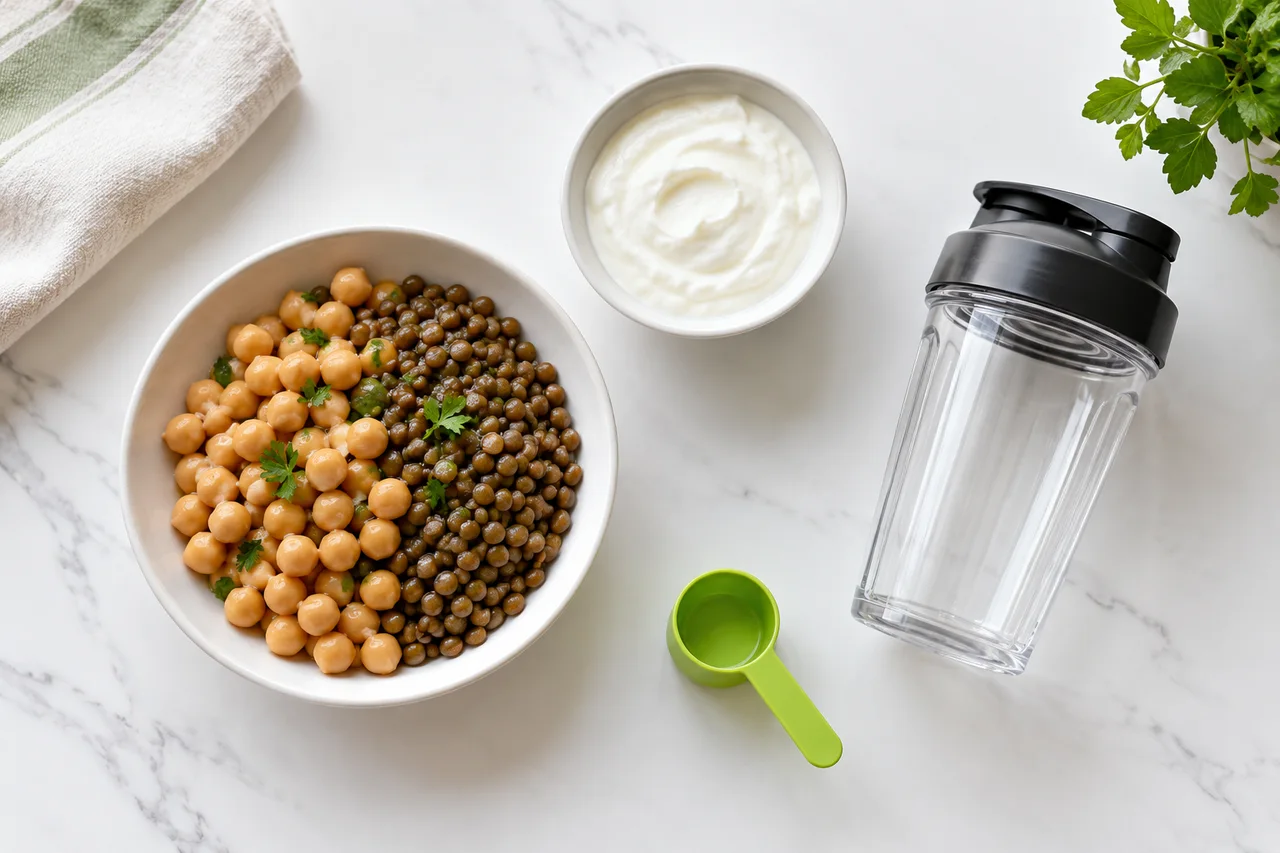
For most healthy lifters, a separate BCAA supplement is unnecessary when complete protein intake is adequate. Possible soreness benefits do not establish extra muscle growth or fat loss.
Know what supports the takeaway.
- Key finding
- For most healthy lifters, a separate BCAA supplement is unnecessary when complete protein intake is adequate. Possible soreness benefits do not establish extra muscle growth or fat loss.
- People, setting & outcomes
- Mechanistic human amino-acid research and protein evidence; acute synthesis is distinct from long-term muscle retention.
- Types of evidence
- Mechanistic or early evidence · Human or controlled experiments · Research synthesis · Guidance, observational research or review. These labels describe sources, not a formal certainty grade.
- Limits
- Acute synthesis, soreness and blood-marker changes do not establish long-term muscle gain. Recovery trials vary in dose and protein control. Specialized clinical uses do not make BCAAs necessary for healthy lifters.
- Editorial source review
- · The Strong Table. No independent clinical reviewer or endorsement is claimed.
BCAAs are essential amino acids. A BCAA supplement is not an essential purchase. Leucine, isoleucine and valine already arrive in ordinary protein foods and complete protein powders.
The right question is where your current nutrition falls short. Being in a calorie deficit or training before breakfast does not, by itself, create a special need for a three-amino-acid drink.
The signal needs the building materials
Leucine helps activate pathways involved in muscle protein synthesis. But synthesis also requires the other essential amino acids. BCAAs supply only three of the nine. Sending a stronger signal without supplying all the necessary material is not the same as building more muscle over months.[1]
A small acute study found that BCAAs stimulated synthesis after exercise compared with placebo. That is a real finding, but an acute response is not proof that BCAAs match complete protein or improve long-term gains when total intake is already sufficient. The comparator and timescale matter.[2]
Benefits: give each claim its own verdict
Reviews support a narrower story than the marketing. Some post-exercise soreness outcomes improve, but muscle gain, fat loss and reliable performance benefits require separate evidence.[3][4][5]
| Benefit or claim | What the evidence supports | Who it applies to |
|---|---|---|
| Muscle-building signal | Leucine can stimulate signalling and acute synthesis | Needs all essential amino acids for sustained construction |
| Soreness / damage markers | Possible modest benefits after demanding exercise | Small, varied trials; markers do not equal better gains |
| Muscle retention during dieting | No established extra advantage over adequate complete protein | Fix total protein and training first |
| Performance / endurance | No consistent dependable enhancement | Not a replacement for carbohydrate or hydration |
| Fat loss | No established direct advantage | A calorie deficit still matters |
| Clinical uses | May be used in selected medical nutrition settings | Specialist-directed; not a healthy-lifter indication |
What the recovery meta-analyses show
A 2024 meta-analysis reported reductions in some muscle-soreness and indirect damage outcomes, with the response depending on protocol and measurement time. A separate overview of systematic reviews found that study quality and consistency limited the conclusions. These are reasons to describe possible recovery help rather than guarantee it.[3][4]
Creatine kinase is a blood marker, not a direct measure of whether your next session improves. Lower soreness also does not automatically mean more hypertrophy. Ask whether a trial measured performance, controlled daily protein and compared BCAAs with a useful alternative—not just a non-protein placebo.
Dieting: protect muscle with the whole plan
Sports nutrition guidance commonly places most exercising adults around 1.4–2.0 g/kg/day of protein, with individualized needs potentially higher during a demanding calorie deficit. Resistance training and avoiding an unnecessarily aggressive deficit also matter. A low-protein diet plus BCAAs is still missing a complete foundation.[6]
A protein-rich meal or whey, soy or another appropriate complete protein supplies BCAAs plus the other essential amino acids. If appetite is low or the schedule is awkward, solve that practical problem with an easier complete serving. Adding a flavoured BCAA drink may make water appealing, but flavour is not proof of muscle protection.
Fasted training and “when needed”
If you train before breakfast and can eat a suitable meal afterwards, BCAAs are usually a low-priority addition. If food is unavailable for a long period and protein coverage is a real concern, complete protein or an appropriate all-essential-amino-acid product addresses the missing building materials more directly. Individual medical needs are different.[1][5]
BCAAs are amino acids, not calorie-free magic. They do not preserve a strict fast simply because the product looks like water. For a long endurance session, carbohydrate and fluids are often more relevant performance tools than BCAAs. Do not let a fasting rule obscure the purpose of the session or your overall nutrition.[5]
Dose, label and the sensible verdict
BCAA studies use varied doses, often roughly 5–20 g/day, with no established optimal dose for extra muscle gain in a protein-sufficient lifter. A 2:1:1 or higher-leucine ratio is not proof of superior long-term results. If you still choose a product, check actual grams, added stimulants and independent quality testing.[3][5]
The practical hierarchy is simple: sufficient complete protein, a manageable diet and training, then optional experiments with realistic expectations. There may be specialized clinical situations where BCAAs are used, but those require a clinician. For the ordinary lifter asking “when are they needed?”, a standalone BCAA supplement is usually not needed.
Read the evidence.
Follow the studies and official guidance. Numbered references identify the research behind the relevant discussion; practical suggestions and personal perspective are distinguished from study findings.
- Mechanistic evidence reviewWolfe: BCAAs and muscle protein synthesis, 2017 ↗
- Small acute experimentJackman et al.: BCAAs after resistance exercise, 2017 ↗
- Systematic review and meta-analysisSalem et al.: BCAAs and damage/soreness, 2024 ↗
- Overview of systematic reviewsBCAAs and post-exercise recovery: overview, 2024 ↗
- Official evidence and safety summaryNIH ODS: BCAAs and sports-supplement evidence ↗
- Sports nutrition position standISSN: Protein and exercise, 2017 ↗
General education for adults. Medical symptoms, prescribed diets and medication changes need individual guidance from a qualified healthcare professional.