Supplements / FROM THE EDITOR
Creatine for women: benefits, limits and practical use
A clear guide to what current studies suggest, where they fall short and what to consider before use.
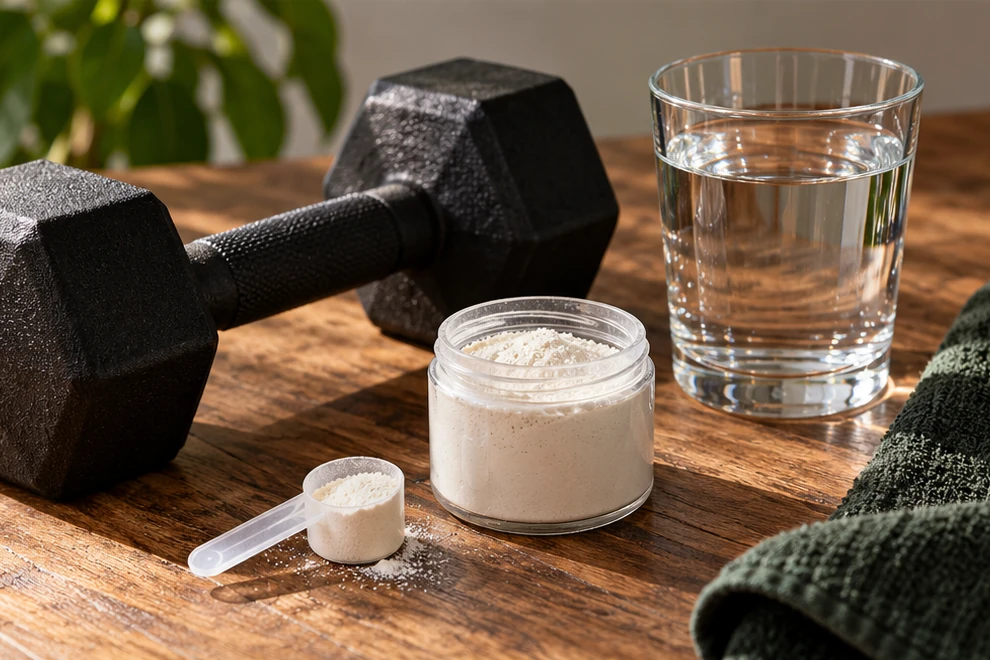
Creatine monohydrate may help some high-intensity training outcomes, but women-specific evidence is still limited and mixed.
Know what supports the takeaway.
- Key finding
- Creatine monohydrate may help some high-intensity training outcomes, but women-specific evidence is still limited and mixed.
- People, setting & outcomes
- Types of evidence
- Research synthesis · Guidance, observational research or review. These labels describe sources, not a formal certainty grade.
- Limits
- Women-specific trials are relatively few and heterogeneous. This article is general education, not personal medical advice.
- Editorial source review
- · The Strong Table. No independent clinical reviewer or endorsement is claimed.
Creatine is often discussed as if the evidence answers every question for every woman. It does not. A 2025 review gathered 27 studies, with promising findings in some outcomes and gaps that deserve a measured read.
What the studies can tell us
The review found reported benefits in some strength and anaerobic-performance measures, but results were not consistent across all studies and outcomes. The trials differed in design, dose and participants, so no universal result follows.[1]
What to expect in practice
Creatine monohydrate is the best-studied form for repeated high-intensity efforts. Some people see a small increase in body weight from water stored with muscle. That is not body-fat gain, and it may or may not matter to your sport or preference.[2]
A sensible checklist
You can make progress without supplements. Training, food, sleep and consistency remain the foundation. If you choose creatine, assess whether it helps your training rather than expecting a guaranteed change.[3]
- Choose plain creatine monohydrate from a third-party tested brand.
- Follow the product label; a loading phase is optional, not required.
- Discuss use with a clinician if pregnant, breastfeeding, managing kidney disease or taking relevant medication.
Read the evidence.
Follow the studies and official guidance. Numbered references identify the research behind the relevant discussion; practical suggestions and personal perspective are distinguished from study findings.
- Systematic reviewTam et al. (2025): creatine supplementation in women, systematic review
- Evidence summaryNIH ODS: exercise and athletic performance supplements
- Systematic review and meta-analysisWang et al. (2024): creatine and strength, systematic review and meta-analysis
General education for adults. Medical symptoms, prescribed diets and medication changes need individual guidance from a qualified healthcare professional.