Nutrition / FROM THE EDITOR
Eat well without paying the fitness tax
Affordable protein, flexible staples and a practical way to compare food costs without buying an entire “health food” aisle.
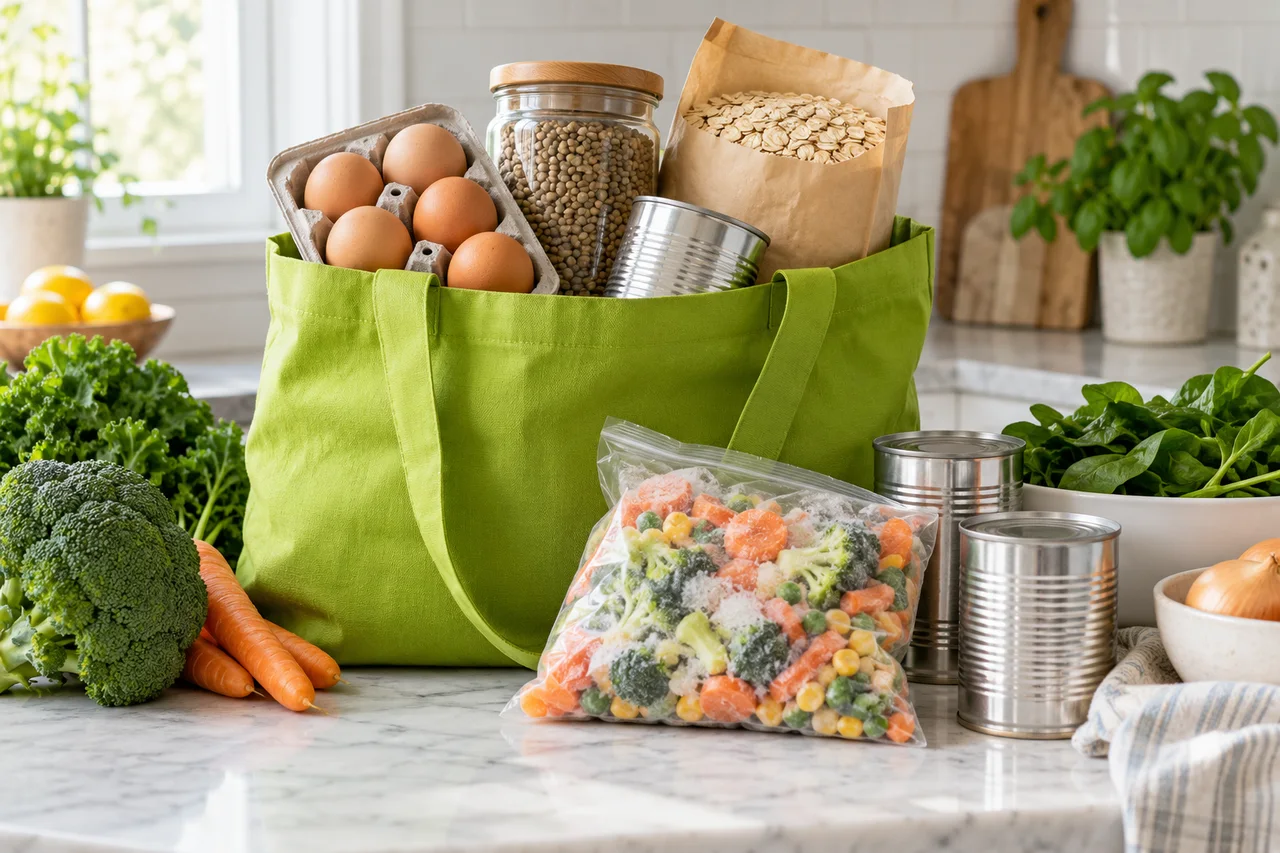
Build meals from affordable staples you will actually use. Compare cost per edible serving, check protein labels, and reduce waste before chasing premium products.
Know what supports the takeaway.
- Key finding
- Build meals from affordable staples you will actually use. Compare cost per edible serving, check protein labels, and reduce waste before chasing premium products.
- People, setting & outcomes
- Population nutrition guidance and practical food-planning resources; this is not a supplement or weight-loss trial.
- Types of evidence
- Guidance, observational research or review. These labels describe sources, not a formal certainty grade.
- Limits
- No retailer prices or guaranteed weekly grocery totals are claimed. Cost examples are invented to teach comparison; check current local prices, food labels and safe storage guidance.
- Editorial source review
- · The Strong Table. No independent clinical reviewer or endorsement is claimed.
I do not think a useful meal plan should require expensive powders, imported snacks or a different recipe every night. The cheapest food is not helpful if you hate it, cannot prepare it or throw half of it away. Value means nourishment you can turn into meals.
This is a practical guide, not a promise that the same basket costs the same everywhere. Prices vary by country, store, season and household. The aim is to give you a shopping method that still works when a flyer changes.
Start with a small rotation of protein foods
Beans, lentils, eggs, tofu, milk or fortified alternatives, plain yogurt, canned fish and sale-priced poultry can all be useful options. Some are cheaper in one store and surprisingly expensive in another. Compare the foods available to you rather than assuming a particular product always wins.
Plant proteins deserve a real place in the rotation. Lentils and beans also contribute fibre, and canned versions save preparation time. A larger serving, a combination with grains or an additional protein food may suit your target better than a very small portion. You do not need every meal to mimic a chicken-and-rice bodybuilding plate.[1]
Compare the unit you actually eat
Price per kilogram is a useful start, but bones, skin, draining, cooking losses and spoilage affect the edible amount. A huge packet is not cheaper if much of it goes unused. For protein foods, you can add a second comparison: cost per 25 grams of protein, using the package label.
For an invented example, a CAD $6 pack containing 100 grams of protein in total costs $1.50 per 25 grams. A CAD $4 pack containing 50 grams costs $2.00 per 25 grams. That does not decide everything: taste, nutrients, allergies, preparation time and portion size still matter. These are calculation examples, not current store prices.
Compare ordinary food with powder on the same basis if convenience is your concern. Then ask whether the powder saves enough time to justify it. Avoid comparing one scoop with an entire family-sized container or forgetting the actual number of servings.
Build a grocery basket that can become several meals
Choose a few foods that overlap across recipes. Oats can become breakfast or a yogurt bowl. Lentils can become soup, a rice bowl or a tomato-based sauce. Frozen vegetables can go into eggs, noodles or a curry. That overlap lowers waste without forcing you to eat an identical meal all week.
| Food group | Budget candidates | Easy uses |
|---|---|---|
| Protein | Lentils, beans, eggs, tofu, plain yogurt, canned fish, sale poultry | Soup, stir-fry, wraps, breakfast, grain bowls |
| Carbohydrate | Oats, rice, potatoes, pasta, bread | Breakfast, tray meals, bowls, sandwiches |
| Produce | Frozen vegetables, cabbage, carrots, seasonal fruit | Roasting, soup, slaw, snacks |
| Flavour and fats | Oil, peanut butter, seeds, spices, lemon | Dressings, sauces and satisfying portions |
Make three meals do more work
A useful starting rotation might be oats with yogurt or a suitable alternative; a lentil-and-rice bowl with vegetables; and eggs, tofu or sale-priced chicken with potatoes and cabbage. Adjust amounts to your appetite and macro goals. These are meal structures rather than fixed calorie prescriptions.
Batch one carbohydrate and one protein, then change the flavour. A tomato sauce, curry seasoning or lemon dressing creates variety without requiring a second grocery shop. Reserve part of the cooked food for later rather than leaving a large container in the fridge indefinitely.
Freezer space, cooking equipment and time are real constraints. Canned beans, microwaveable staples or pre-cut vegetables may be better value for a particular household even if the sticker price is higher. A plan that depends on resources you do not have is not a budget plan.
Use a shopping routine instead of willpower
Check what you already own, choose a few meals, write a list and compare the unit prices of the foods you regularly buy. Frozen and canned foods can be convenient alternatives when fresh produce is costly or likely to spoil.[1]
- Buy larger amounts only when you can store and use them safely.
- Choose a realistic number of new recipes; keep dependable meals in rotation.
- Use sale protein to replace an option, not to add an unplanned purchase.
- Keep an easy backup meal for days when cooking does not happen.
- Compare your actual food waste and takeaway spending before cutting portions.
Cheap should still be safe and enjoyable
Follow local food-safety guidance when cooling, refrigerating and reheating batch-cooked meals. Freeze portions you will not use promptly. “Meal prep” is not a reason to stretch safe storage times. Allergens and medical dietary requirements take priority over a bargain.
My favourite version of budget eating leaves room for foods you enjoy. Sometimes a small convenience purchase prevents an expensive takeaway. Sometimes the most useful choice is making enough dinner for tomorrow’s lunch. The goal is a repeatable kitchen routine, not proving that you can survive on the least appealing meal possible.
If food access itself is the problem, recipe optimisation cannot solve everything. Community food programmes and local support may be more valuable than another shopping tip. A realistic plan respects the budget and the person using it.
Read the evidence.
Follow the studies and official guidance. Numbered references identify the research behind the relevant discussion; practical suggestions and personal perspective are distinguished from study findings.
- Official practical guidanceHealth Canada: Healthy eating on a budget ↗
General education for adults. Medical symptoms, prescribed diets and medication changes need individual guidance from a qualified healthcare professional.