Plant Benefits / FROM THE EDITOR
English ivy and mould: why the “94% overnight” claim is misleading
An eye-catching number is not a reason to ignore damp walls. Here is the more useful way to think about ivy indoors.
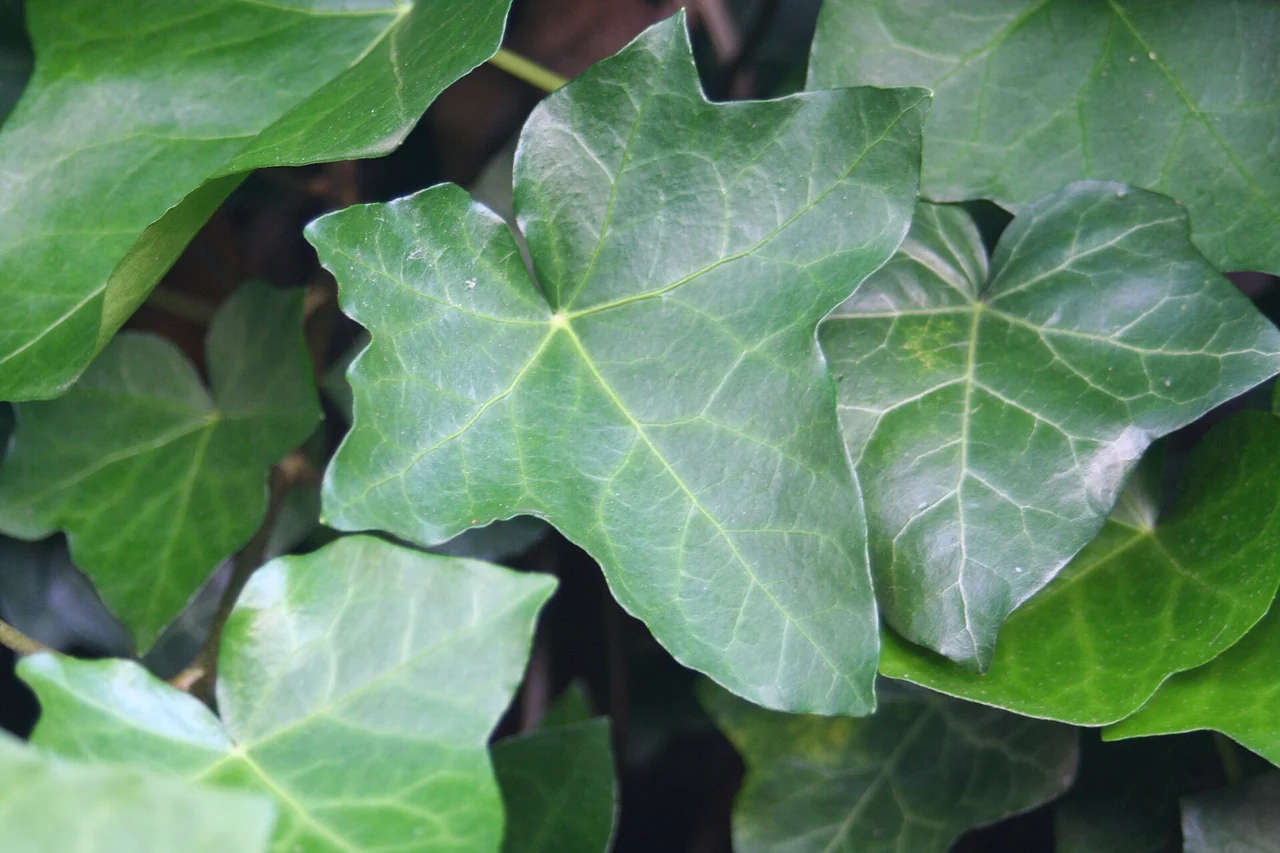
Choose ivy for its trailing foliage. Fix moisture and leaks to control mould; a plant is not a remediation method.
Know what supports the takeaway.
- Key finding
- Choose ivy for its trailing foliage. Fix moisture and leaks to control mould; a plant is not a remediation method.
- People, setting & outcomes
- Environmental guidance and laboratory/chamber claims; a household mould-reduction percentage has not been established.
- Types of evidence
- Guidance, observational research or review. These labels describe sources, not a formal certainty grade.
- Limits
- The widely shared 94% figure is not verified here as a mould reduction rate for real homes. Ivy should not be used to treat dampness or mould contamination.
- Editorial source review
- · The Strong Table. No independent clinical reviewer or endorsement is claimed.
English ivy looks at home cascading from a shelf, and its familiar leaves make it a popular indoor choice. Online, that appeal is often attached to a striking claim: almost all airborne mould disappears overnight. The precision of the number can make it sound more reliable than it is.
For a claim about your home, we need evidence from comparable rooms, appropriate controls and repeatable measurements—not just a percentage detached from its experiment.
What an impressive percentage leaves out
The circulating 94% claim does not establish that ivy removes 94% of mould from an ordinary bedroom. We could not verify a peer-reviewed occupied-home trial supporting that promise. Concentration changes in a small experiment can also reflect settling, sampling and other processes, not only the plant.
Ask what was measured: spores, other particles or chemical gases? Ask how large the chamber was and whether the result was replicated. These details change the meaning completely. An air-cleaning claim should not be made broader than the method that produced it.
Mould control begins with moisture
EPA guidance prioritizes fixing leaks, drying damp materials and controlling humidity. It suggests keeping indoor relative humidity below 60%, ideally around 30–50% where possible. A plant does not correct a wet wall, roof leak or persistent condensation.[1]
If you can see mould, smell persistent mustiness or find recurring dampness, address the source. Adding pots and wet soil may complicate a moisture problem. Do not wait overnight for the ivy to perform a task it has not been shown to do.
The worthwhile reason to grow it
English ivy has attractive climbing or trailing growth and can be grown in containers. It needs suitable light and care, and NC State identifies ingestion and contact risks. Keep the plant contained; outdoor escape is a concern in places where ivy is invasive.[2]
For a home office, a small trailing plant can soften the visual edge of a shelf. Position it where you can inspect the soil and leaves instead of treating it as maintenance-free decoration. A neat container and manageable vine length make care easier.
A better bedside decision
If the room is already damp or poorly ventilated, improve that environment first. If it is dry, comfortable and appropriately lit, choose a plant you actually enjoy. Ivy is optional, and a different species may be easier if pets or children can reach the shelf.
The strongest benefit here is honest and modest: an attractive plant, a small care routine and a space you like spending time in. It does not need a dramatic overnight claim to justify its place.
Read the evidence.
Follow the studies and official guidance. Numbered references identify the research behind the relevant discussion; practical suggestions and personal perspective are distinguished from study findings.
- Official environmental guidanceUS EPA: mould, moisture and your home ↗
- University horticulture guidanceNC State Extension — hedera helix ↗
General education for adults. Medical symptoms, prescribed diets and medication changes need individual guidance from a qualified healthcare professional.