Dieting / FROM THE EDITOR
IIFYM: flexibility works better with a foundation
Calories, protein and food quality can share the same plan. Here is how to make “if it fits your macros” useful instead of literal.
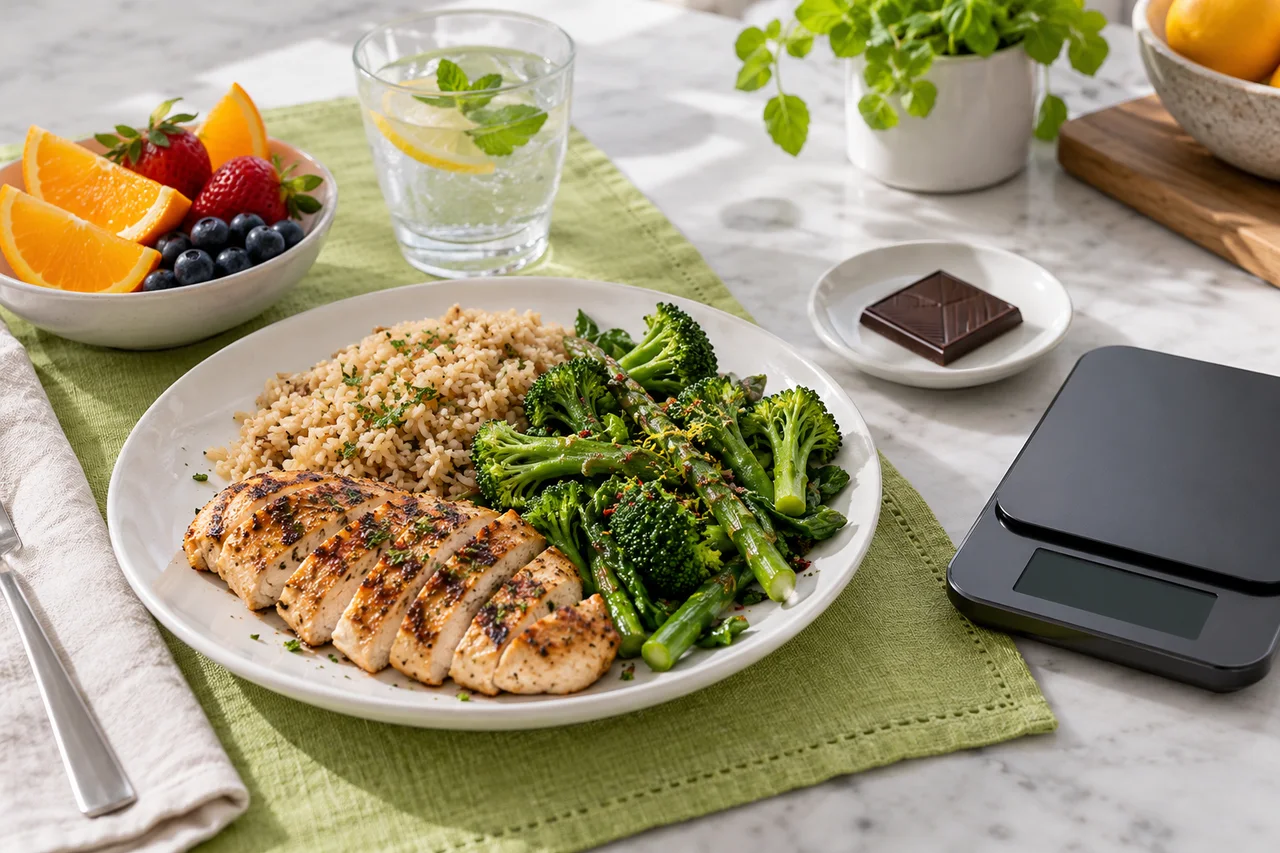
A sustained energy deficit generally leads to fat loss. Macro targets can organise that deficit, but they do not replace fibre, micronutrients, protein quality or a healthy relationship with food.
Know what supports the takeaway.
- Key finding
- A sustained energy deficit generally leads to fat loss. Macro targets can organise that deficit, but they do not replace fibre, micronutrients, protein quality or a healthy relationship with food.
- People, setting & outcomes
- Human energy-balance research and dietary guidance; meeting macros alone does not measure diet quality.
- Types of evidence
- Guidance, observational research or review · Human or controlled experiments. These labels describe sources, not a formal certainty grade.
- Limits
- Flexible dieting evidence does not establish superiority for every person. Calories and macros are estimated; weight change also includes water and potentially lean tissue.
- Editorial source review
- · The Strong Table. No independent clinical reviewer or endorsement is claimed.
I like the permission built into flexible dieting: you can include food you enjoy without declaring the entire day ruined. I am less enthusiastic when “if it fits your macros” becomes “nothing else about food matters.”
IIFYM can be a useful framework. Its strongest version combines an appropriate calorie target with protein, varied meals and enough flexibility to keep living. The weakest version treats a spreadsheet as the complete definition of health.
Calories establish the direction; macros influence the plan
A sustained energy deficit means average energy intake is below expenditure. Over time, the body must obtain energy from stored tissue. Fat loss is generally the intended result, but lean tissue can also be lost; resistance training, adequate protein and a sensible rate of loss help support body composition.
Protein and carbohydrate supply about four calories per gram and fat about nine. Those approximate values make targets useful for planning. Alcohol also supplies energy and does not vanish because it is not one of the three usual macros. Labels, portion estimates and restaurant entries are imperfect, so exact-looking totals are still estimates.[1]
What flexible-diet research can actually tell us
A randomized trial in resistance-trained adults compared flexible and rigid dieting during an energy-restricted phase. Both approaches produced fat loss, without a clear advantage for the flexible approach during the diet. That supports the possibility of more than one workable structure, not proof that IIFYM beats every alternative.[2]
The study was small and specific to trained participants. It cannot settle every psychological or long-term question. Some people like a target and flexible food choices; others find tracking stressful. The best framework needs to work for the person, not win an argument about diet labels.
Food quality still does useful work
Foods with matching calories and macros are not nutritionally identical. They can differ in fibre, vitamins, minerals, fat types, sodium, digestion and how satisfying they are. A macro app does not automatically tell you whether your meals contain enough produce or meet a medical dietary requirement.
Use a varied food pattern as the foundation: protein-containing meals, vegetables and fruit, suitable grains or starchy foods, and sources of healthy fats. Then fit preferred foods around that foundation. Health Canada’s guidance includes dietary variety, plant protein and the broader context of eating, rather than reducing the whole pattern to macro totals.[3]
A practical order for setting targets
Start with an estimated energy target appropriate for your goal. Set protein in a useful range for your activity and circumstances, include adequate fat, and distribute carbohydrate and the remaining fat around preference and training. Avoid forcing every person into the same percentages.
- Choose a modest, reviewable calorie target instead of the lowest number you can tolerate.
- Include a substantial protein source at regular meals.
- Keep fibre-rich foods and produce in the plan.
- Leave realistic space for favourite foods and social meals.
- Use average trends to refine the estimate; do not chase perfect daily numbers.
- Consider portions or a plate-based approach if tracking is unsuitable.
Precision should not become rigidity
A meal slightly above your carbohydrate target is not a physiological emergency. Daily variation is normal. Consistency across time matters more than repeatedly correcting tiny differences with extra exercise or skipped meals. Weighing some foods can teach portion awareness, but it need not become a permanent obligation.
If you are always hungry, training poorly or thinking about food all day, review the deficit and meal structure. If tracking is increasing anxiety, guilt or binge-and-restrict behaviour, change the approach and seek suitable support. An eating-disorder history deserves more care than an app can provide.
When the scale disagrees with the app
If the average trend is flat for several weeks, your logged deficit may not match the actual energy balance. Portions, oils, drinks, weekend eating, lower activity and estimation error are ordinary explanations. Water changes can also mask a shorter trend. Review those factors before concluding that calories no longer matter.
Make a small, sustainable adjustment only after enough observation. Protect training, recovery and dietary adequacy. The goal is not to hit numbers while feeling progressively worse; it is to build a pattern that produces a useful result and remains manageable.
My view is that flexibility is strongest when it has a foundation. Energy balance explains why fat loss can happen with different food choices. Food quality explains why those choices can feel different and support health differently. You can respect both without making your meals unnecessarily complicated.
Read the evidence.
Follow the studies and official guidance. Numbered references identify the research behind the relevant discussion; practical suggestions and personal perspective are distinguished from study findings.
- Official energy-balance modellingNIDDK: Research behind the Body Weight Planner ↗
- Small randomized trialConlin et al.: Flexible versus rigid dieting, 2021 ↗
- Official food-pattern guidanceHealth Canada: Canada’s Dietary Guidelines ↗
General education for adults. Medical symptoms, prescribed diets and medication changes need individual guidance from a qualified healthcare professional.