Metabolism / FROM THE EDITOR
The calories between your workouts
Why everyday movement deserves a place in your fat-loss plan—and how to build more of it without living in the gym.
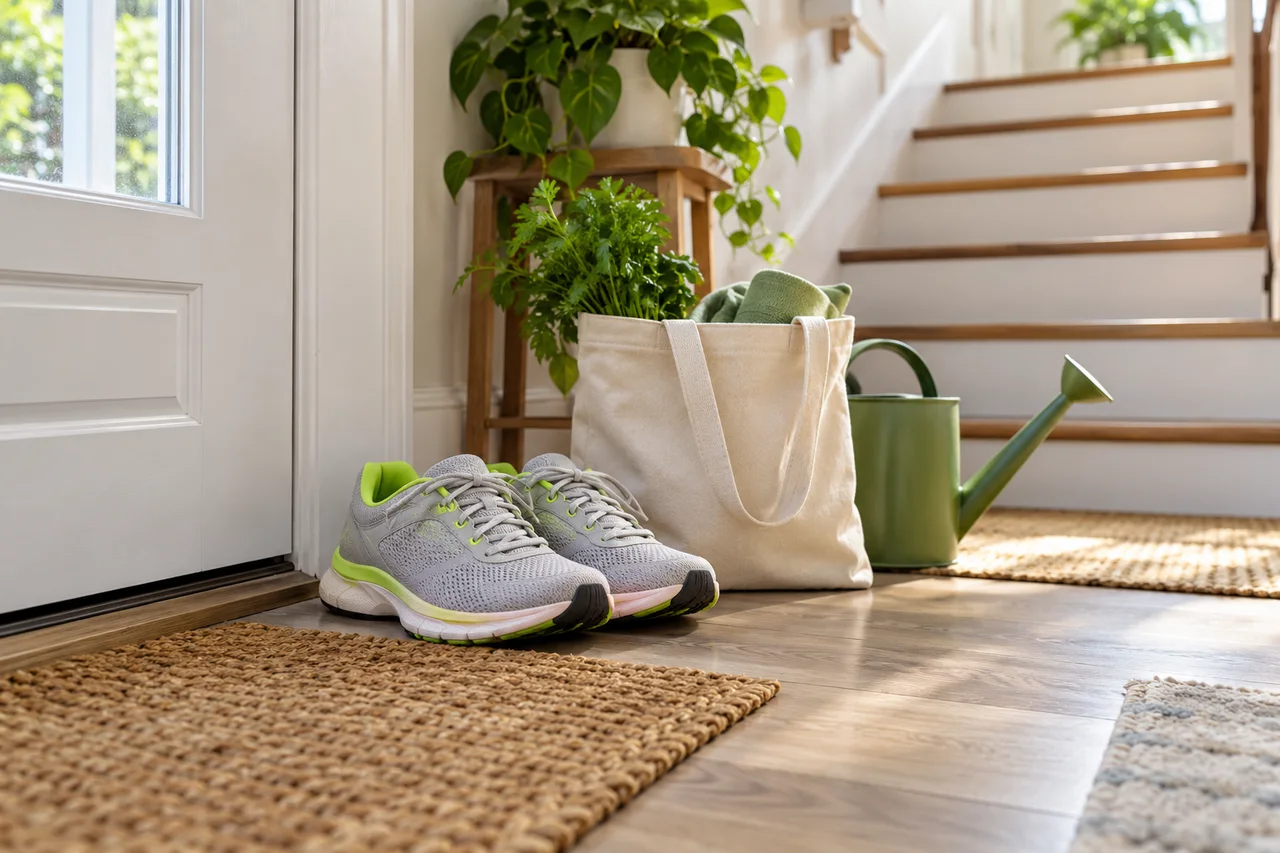
Keep training. Also make ordinary movement easier to repeat. NEAT matters, but a step counter cannot tell you exactly how many calories you burned.
Know what supports the takeaway.
- Key finding
- Keep training. Also make ordinary movement easier to repeat. NEAT matters, but a step counter cannot tell you exactly how many calories you burned.
- People, setting & outcomes
- Human energy-expenditure and activity research; daily movement and responses vary substantially.
- Types of evidence
- Mechanistic or early evidence · Human or controlled experiments · Guidance, observational research or review. These labels describe sources, not a formal certainty grade.
- Limits
- NEAT varies between people. Overfeeding experiments do not establish an exact fat-loss prescription, and step counts do not measure energy expenditure precisely.
- Editorial source review
- · The Strong Table. No independent clinical reviewer or endorsement is claimed.
I think the least glamorous part of a fitness plan often deserves more attention. We can spend an hour debating the perfect workout and overlook the other waking hours: the errands, kitchen clean-up, stairs, standing breaks and trips across the room. Those small movements are part of the energy your body uses each day.
This is where NEAT—non-exercise activity thermogenesis—comes in. It is useful because it changes the conversation from “How hard can I train?” to “How can I make my ordinary day a little more active?” That question leaves room for beginners, desk workers and older adults alike.
What NEAT actually means
NEAT is the energy spent on physical activity outside deliberate sport or exercise. Walking to a meeting, carrying groceries and shifting position count. Sleeping, digestion and your resting metabolism are separate pieces of total daily expenditure. A planned treadmill session is exercise; walking around the office is usually NEAT. The distinction is a research category, not a reason to worry about which label your walk earns.[1]
What matters practically is the full day. Two people can complete the same workout and have very different activity patterns afterward. A tiring training session may even be followed by more sitting. Your workout remains valuable, but its calorie estimate is not the whole daily picture.
The study that made people pay attention
In a classic 1999 experiment, researchers overfed 16 adults and found substantial individual variation in how much fat they gained. Changes in NEAT were strongly associated with resistance to fat gain. This helped show that everyday activity is a meaningful, variable component of energy expenditure.[2]
That does not mean fidgeting is a weight-loss treatment, or that everyone can reproduce the experiment’s energy changes. It was a small, controlled overfeeding study, not a trial proving a specific step target causes a particular amount of fat loss. My takeaway is simpler: do not assume that everyone’s non-exercise activity stays fixed.
Why dieting can quietly change your day
NEAT can change with energy availability. When you eat less, you may feel less inclined to get up, do chores or move between tasks. This is one reason a calorie target that worked earlier can produce a different result later. A smaller body also needs less energy to move; several things can change at once.[1]
Before cutting food again, look at the routine. Have work demands increased? Have walks disappeared? Is fatigue making you sit more? These are questions worth answering without blaming yourself. A plan should fit real circumstances, including mobility limitations and recovery needs.
Build movement into things you already do
I prefer attaching movement to existing moments over creating a second job called “getting steps.” Choose one habit for a week, then decide whether it is comfortable enough to keep. Start below your maximum. Consistency is the goal, not soreness or a record on a watch.
- Walk for five minutes after one meal, if walking is comfortable for you.
- Stand up or change position between work tasks; add a short movement break when possible.
- Make one routine errand an active trip, or walk a small part of it.
- Use seated movement, adapted household tasks or accessible routes when standing or walking is limited.
- Keep purposeful strength and aerobic training in your week; everyday movement complements them.
Track a trend, not a calorie promise
Record a normal week before choosing a target. Your personal baseline is more useful than a universal 10,000-step rule. If you use steps, compare averages across similar weeks. Increase modestly only if your feet, joints, energy and schedule tolerate it. You can instead track movement breaks or minutes when a step count is unsuitable.
Avoid automatically eating back every calorie a wearable displays. Treat the number as an estimate and use longer-term body-weight trends, waist measurements, training performance and hunger to judge the overall plan. Day-to-day scale changes still reflect water and digestion, so one weigh-in cannot settle whether your movement habit is helping.
More movement is not always the next answer
Light activity can support health and reduce sedentary time, while formal activity recommendations also include aerobic and muscle-strengthening work. Older adults benefit from activities that develop balance as well. These goals can coexist, but they need to be progressed appropriately.[3]
If you are persistently exhausted, dizzy, injured or using movement to compensate anxiously for meals, adding more is not the priority. Resolve the cause and adjust the plan. My view is that NEAT works best as an ordinary, flexible habit—not a punishment for eating or a contest to burn the most calories.
Read the evidence.
Follow the studies and official guidance. Numbered references identify the research behind the relevant discussion; practical suggestions and personal perspective are distinguished from study findings.
- Physiology reviewLevine: Non-exercise activity thermogenesis, 2002 ↗
- Small controlled experimentLevine et al.: NEAT and resistance to fat gain, 1999 ↗
- Public health guidanceWorld Health Organization: Physical activity ↗
General education for adults. Medical symptoms, prescribed diets and medication changes need individual guidance from a qualified healthcare professional.