Supplements / FROM THE EDITOR
Two non-stimulant fat-loss ingredients: what is realistic?
L-carnitine and psyllium have human trial data. Here is the size of the effect, the conflicting reviews and the stronger reasons to consider fibre.
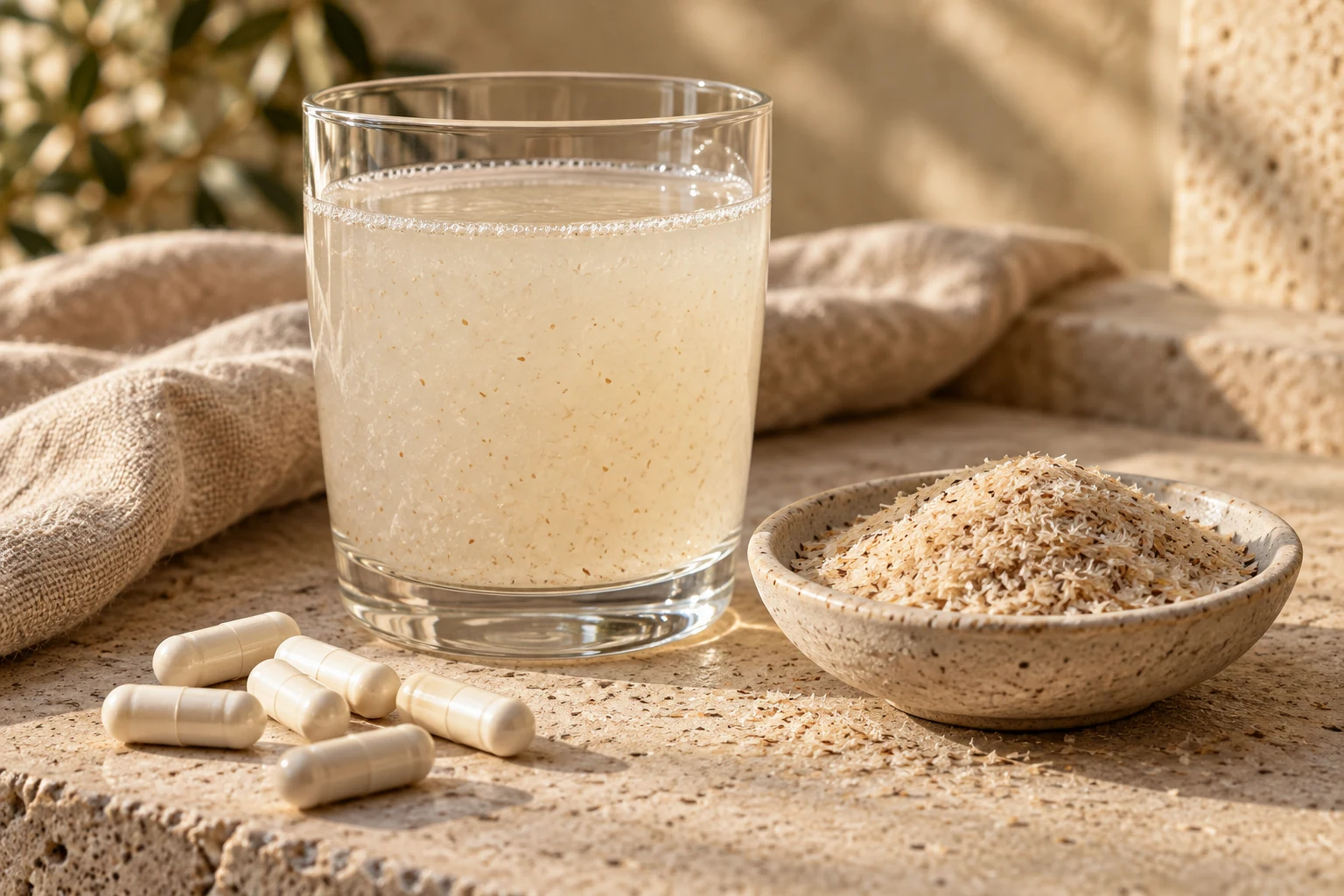
Neither ingredient is a powerful fat burner. L-carnitine shows small average weight effects; psyllium may support appetite and has clearer cholesterol and bowel benefits.
Know what supports the takeaway.
- Key finding
- Neither ingredient is a powerful fat burner. L-carnitine shows small average weight effects; psyllium may support appetite and has clearer cholesterol and bowel benefits.
- People, setting & outcomes
- Adults in heterogeneous L-carnitine and fibre trials; ingredient averages do not validate a finished fat-burner product.
- Types of evidence
- Research synthesis · Guidance, observational research or review. These labels describe sources, not a formal certainty grade.
- Limits
- Weight-loss trials are heterogeneous and often involve people with overweight or metabolic disease. Psyllium review conclusions conflict, and some authors have industry ties. These are modest support options, not powerful proven fat burners.
- Editorial source review
- · The Strong Table. No independent clinical reviewer or endorsement is claimed.
Removing stimulants does not automatically make a weight-loss supplement effective. It does make it worth separating a genuine human finding from a metabolism story.
L-carnitine and psyllium are two researched examples with different mechanisms. The honest comparison is about modest possible support—not a substitute for an eating plan that creates a sustainable calorie deficit.
The comparison that matters
Human randomized trials are more informative than claims about burning fat in a test tube. Even then, pooled weight changes need context: study length, participants, other treatments and whether the reviews agree.[1][2][3][4]
| Ingredient | Potential benefit | Important limitation |
|---|---|---|
| L-carnitine | Small average body-weight reduction in pooled trials | Not established as a major fat-loss aid in healthy lean athletes |
| Psyllium | Possible appetite/weight support; lowers LDL and aids bowel regularity | Weight-loss reviews conflict; not a direct fat burner |
| Both | Non-stimulant options with human research | Effects are modest; neither targets belly fat or replaces energy balance |
L-carnitine: transport is not a guarantee
Carnitine helps transport fatty acids into mitochondria. Most healthy people make enough, so an essential metabolic role does not mean extra capsules force extra body-fat loss. A 2020 meta-analysis of 37 randomized trials found about 1.21 kg lower body weight on average, with an uncertainty interval of roughly 0.68–1.73 kg lower.[1]
Fat-mass findings were positive in some analyses, but body-fat percentage and waist circumference did not show consistent improvement. Trials varied in duration, health status and co-interventions. Do not present the pooled number as an extra kilogram every month, or assume it transfers to a lean person already training well.
Carnitine doses, other uses and safety
Many studies use around 1–3 g/day, with broader ranges and varying duration; the weight meta-analysis suggested a dose-response pattern around 2 g/day. That is research context, not a guarantee or an automatic recommendation. Carnitine deficiency and selected medical uses are separate clinical indications.[1][2]
Potential recovery findings do not establish a major performance benefit in every athlete. Higher doses can cause nausea, diarrhea, cramping and a fishy odor. Carnitine can raise TMAO in some people; what that means for long-term supplement safety is unresolved. Discuss use if you have medical conditions or take medication.[2]
Psyllium: useful fibre, disputed weight advantage
Psyllium forms a gel when mixed with water. A 2023 meta-analysis selected six weight-loss trials in people with overweight or obesity and found about 2.1 kg greater loss, using a mean 10.8 g/day for about 4.8 months. Several authors were affiliated with a psyllium-product manufacturer, an important context for evaluating selection and interpretation.[3]
An earlier, broader 2019 meta-analysis did not find a significant overall weight benefit: about −0.28 kg, with the uncertainty interval including no effect. Differences in trial selection and protocol help explain disagreement. The fairest conclusion is possible appetite/weight support, not a settled or dramatic fat-burning effect.[4]
The fibre benefits with a firmer footing
A 2018 meta-analysis of 28 trials found that psyllium reduced LDL cholesterol and related lipid markers. Psyllium is also used as a bulk-forming treatment for constipation. These can be useful outcomes even if its additional weight effect is small or absent. Improving a risk marker still does not prove a reduction in heart attacks.[5][6]
Check actual grams of psyllium rather than the size of a scoop or capsule. Research commonly uses roughly 10 g/day split across servings; introduce fibre gradually and follow the product’s directions. It should complement fibre-containing meals, not turn your entire nutrition plan into powders.
Water, medications and a sensible decision
Never swallow psyllium dry. MedlinePlus instructs mixing powder with at least 8 ounces—about 240 mL—of liquid and drinking it promptly. People with swallowing problems, possible obstruction or relevant gastrointestinal disease need medical advice. Fibre can change medication absorption; ask a pharmacist about product-specific spacing.[6]
Choose one clearly labelled ingredient if there is a relevant reason to try it. Track the outcome that matters: appetite consistency, bowel symptoms, lipid results or a weekly weight trend. Keep expectations proportional to the evidence. A non-stimulant supplement can support a plan, but it cannot make energy balance optional.
Read the evidence.
Follow the studies and official guidance. Numbered references identify the research behind the relevant discussion; practical suggestions and personal perspective are distinguished from study findings.
- Meta-analysis of 37 randomized trialsTalenezhad et al.: L-carnitine and body composition, 2020 ↗
- Official mechanisms, clinical uses and safety summaryNIH ODS: Carnitine ↗
- Meta-analysis of six selected trials; industry-affiliated authorsGibb et al.: Psyllium and weight loss, 2023 ↗
- Systematic review and dose-response meta-analysisMofrad et al.: Psyllium and anthropometric measures, 2019 ↗
- Meta-analysis of 28 randomized trialsJovanovski et al.: Psyllium and LDL, 2018 ↗
- Official use and safety instructionsMedlinePlus: Psyllium ↗
General education for adults. Medical symptoms, prescribed diets and medication changes need individual guidance from a qualified healthcare professional.