Plant Benefits / FROM THE EDITOR
Rubber plants: a bold green anchor for your home
Large leaves make an impact. Claims about detoxifying your air deserve a much smaller headline.
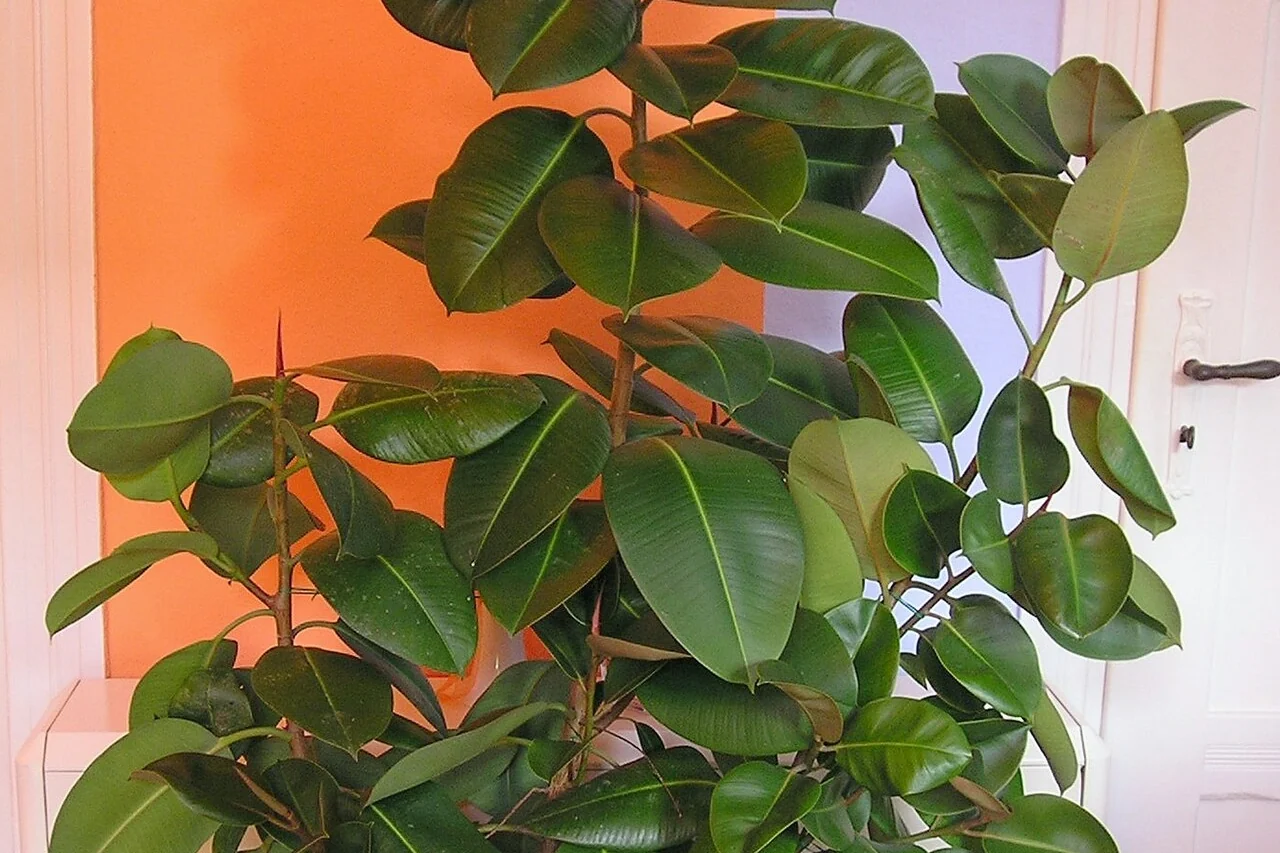
A rubber plant can make a room more inviting and give you a satisfying care project. Choose it for those benefits, not as an air-cleaning appliance.
Know what supports the takeaway.
- Key finding
- A rubber plant can make a room more inviting and give you a satisfying care project. Choose it for those benefits, not as an air-cleaning appliance.
- People, setting & outcomes
- Chamber studies and indoor-air reviews; laboratory pollutant removal does not establish a household air-cleaning dose.
- Types of evidence
- Guidance, observational research or review · Human or controlled experiments. These labels describe sources, not a formal certainty grade.
- Limits
- No clinical rubber-plant benefit or predictable room-air improvement is established. Care routines and design choices are practical suggestions.
- Editorial source review
- · The Strong Table. No independent clinical reviewer or endorsement is claimed.
Sometimes one substantial plant works better than a shelf full of small pots. A rubber plant offers broad glossy leaves and a clear shape that can anchor a living room or home office. It is a design choice with a living element—not a reason to cover every surface in greenery.
Its name and thick leaves often appear in air-purifying lists. Before accepting that label, ask whether the evidence measures a real home or a small controlled enclosure.
Separate leaf biology from room-scale claims
The review by Cummings and Waring found potted-plant VOC removal too low to compete with ordinary building air exchange. A large leaf area does not, by itself, establish meaningful air purification in your room.[1]
This does not make the plant pointless. It means the value belongs in a different category: appearance, interest and a routine of care. Air-quality problems still need an answer directed at their source, ventilation and the pollutant involved.
A plant you can enjoy looking after
Small plant-interaction experiments suggest possible short-term stress benefits, but no rubber-plant-specific health effect is established. Think of the evidence as preliminary support for engaging with greenery, not a guaranteed change in mood.[2]
A larger plant makes growth and leaf condition easy to notice. A brief weekly inspection can become a screen break: look for new growth, check the medium and turn the container if needed. That routine is an editorial suggestion, not a clinical protocol.
Find its home before it gets bigger
NC State’s guidance emphasizes suitable indoor light, drainage and allowing the medium to dry appropriately between watering. Rubber plants can grow substantially. Plan for their mature size rather than judging only the small specimen at the shop.[3]
A bright room corner with clearance from doors and heaters is usually more practical than a nightstand. Choose a stable pot and a location where you can move around it comfortably. Dusty leaves can be gently cleaned without polishing products or elaborate routines.
Sap and household access matter
Rubber plant sap can be irritating, and NC State notes concerns for pets. Keep pruning waste and leaves away from animals and children; protect your skin when handling cut stems if you are sensitive.[3]
If those constraints do not fit the room, choose something smaller or easier to place. A good plant choice should reduce friction, not add another source of worry. The appealing outcome is a home you like spending time in—not a promise of healthier air based on a photograph.
Read the evidence.
Follow the studies and official guidance. Numbered references identify the research behind the relevant discussion; practical suggestions and personal perspective are distinguished from study findings.
- Review and quantitative analysisCummings & Waring (2020): potted plants and indoor VOC removal ↗
- Small randomized crossover experimentLee et al. (2015): plant interaction and short-term stress ↗
- University horticulture guidanceNC State Extension — ficus elastica ↗
General education for adults. Medical symptoms, prescribed diets and medication changes need individual guidance from a qualified healthcare professional.