Dieting / FROM THE EDITOR
The scale jumped. Did you really gain fat?
Water, food and measurement conditions can change the reading long before body fat changes meaningfully.
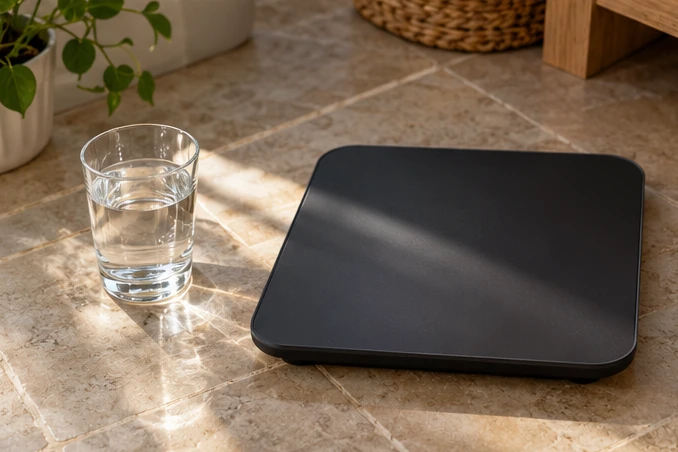
Treat body weight as a trend. A single reading cannot separate fat, water, digestive contents and normal measurement variation.
Know what supports the takeaway.
- Key finding
- Treat body weight as a trend. A single reading cannot separate fat, water, digestive contents and normal measurement variation.
- People, setting & outcomes
- Repeated observations across the menstrual cycle and physiological guidance; short-term changes are not necessarily fat changes.
- Types of evidence
- Guidance, observational research or review. These labels describe sources, not a formal certainty grade.
- Limits
- A scale alone cannot diagnose fluid retention or measure fat change. Cycle effects and supplement responses vary between individuals.
- Editorial source review
- · The Strong Table. No independent clinical reviewer or endorsement is claimed.
A successful week can feel ruined by one unexpected weigh-in. You followed the plan, trained well and then woke up heavier. The natural reaction is to cut food or add exercise immediately. That response often solves a problem the scale has not actually identified.
Body weight is useful information, but it is a combined measurement. It needs context before it becomes a decision.
A number is not a body-composition scan
The scale measures total mass, including water and material still in your digestive system. Changes in meal timing, fluid balance, carbohydrate intake and weighing conditions can alter the reading. The scale cannot tell you which component changed.
A study of menstrual-cycle changes found higher average body weight during menstruation alongside increased extracellular water. That is one documented example of weight movement that cannot simply be labelled fat gain; individual patterns differ.[1]
Standardize what you can
If weighing helps you, use the same scale on a firm surface at a similar time, ideally under comparable morning conditions. Keep clothing and the timing relative to eating consistent. You do not need to achieve laboratory perfection; you need readings that are reasonably comparable.
Review a weekly average or a longer pattern instead of the highest number in the sequence. Daily weighing is optional. If it increases anxiety or compulsive behaviour, fewer measurements or a different progress method may be more useful.
Remember changes that affect water
Creatine supplementation can increase body water and body mass, particularly early in use. That is not equivalent to gaining the same amount of body fat. Record when a supplement or major routine change begins so later readings have context.[2]
The same principle applies to unusually salty meals, travel and changes in training. Note the circumstance rather than trying to estimate an exact amount of water from the scale. A plausible explanation is a reason to observe the trend, not a diagnosis.
Know when to adjust and when to ask for help
If several weeks of comparable readings do not move as intended, review portions, activity and the starting calorie estimate. Make a small, sustainable change rather than treating one high morning as proof that the whole diet failed.
Rapid unexplained weight changes, swelling or other symptoms deserve medical assessment. For routine tracking, pair weight with performance, fit of clothing and habits. The useful question is what the pattern says, not what the loudest single reading makes you feel.
Read the evidence.
Follow the studies and official guidance. Numbered references identify the research behind the relevant discussion; practical suggestions and personal perspective are distinguished from study findings.
- Observational repeated-measure study2023 study: body weight and composition across the menstrual cycle ↗
- Professional position standKreider et al. (2017): creatine safety and efficacy ↗
General education for adults. Medical symptoms, prescribed diets and medication changes need individual guidance from a qualified healthcare professional.