Nutrition / FROM THE EDITOR
If I had $100 for supplements, I would keep it simple
A food-first shortlist: creatine, protein when you need it, and a few decisions that save more money than another tub of powder.
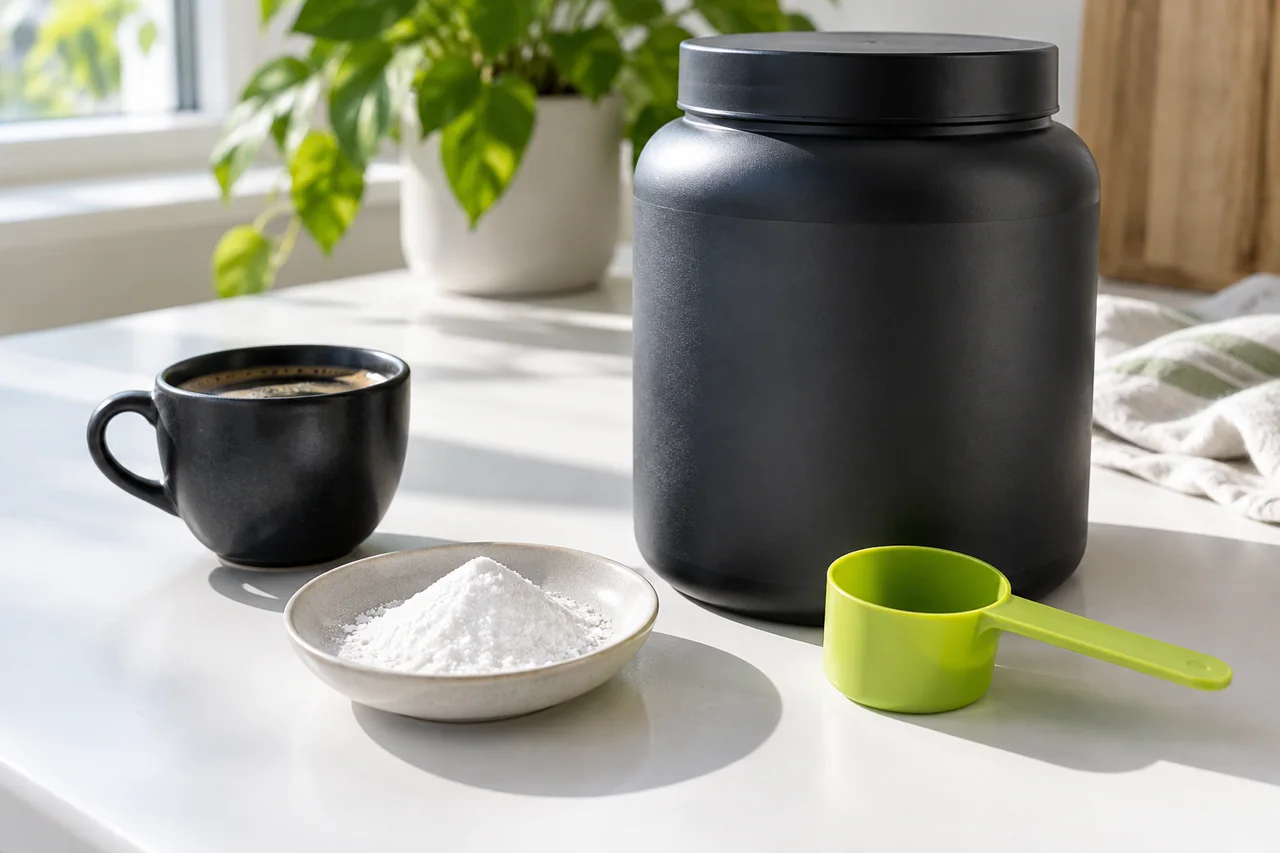
Buy for a genuine need. Creatine monohydrate has good performance evidence; protein powder is convenient food. Most people do not need an elaborate stack.
Know what supports the takeaway.
- Key finding
- Buy for a genuine need. Creatine monohydrate has good performance evidence; protein powder is convenient food. Most people do not need an elaborate stack.
- People, setting & outcomes
- Adult sports-nutrition evidence summaries; individual ingredients were tested in different populations.
- Types of evidence
- Guidance, observational research or review · Research synthesis. These labels describe sources, not a formal certainty grade.
- Limits
- The budget is an illustrative CAD allocation, not verified retail pricing. Supplement evidence and safety differ by ingredient, person and health condition; more products do not guarantee better results.
- Editorial source review
- · The Strong Table. No independent clinical reviewer or endorsement is claimed.
If I had a $100 supplement budget, my first move would be to ask whether I should spend all of it. A better grocery shop, a repeatable training plan or enough sleep can matter more than another product. There is no prize for owning the most tubs.
This is an example of how I would prioritise a CAD $100 budget for a healthy adult doing resistance training. The allocations below are spending caps, not current store quotes or a promise that everyone should buy these products.
First decide what is actually missing
Write down what you eat, what you train for, and what you are trying to improve. A powder is useful when it solves a specific problem: convenient protein at work, or a well-supported aid for repeated high-intensity effort. It is less useful when the goal is vague reassurance that you are “doing everything.”
Supplements do not replace sufficient energy, hydration, suitable training and recovery. The NIH Office of Dietary Supplements reviews evidence ingredient by ingredient; benefits depend on the activity, dose and person, and many products have limited supporting evidence.[1]
Priority one: plain creatine monohydrate
Creatine can improve performance in repeated short, intense efforts and support training-related gains. Monohydrate is the most studied form; a premium-sounding alternative is not automatically better. A common maintenance intake is 3–5 grams a day, and loading is optional rather than necessary.[2]
Daily consistency is more important than finding a magical minute to take it. Some early scale gain reflects water retained with creatine rather than fat. It is not a fat burner, and you still need progressive training. Start with a simple product and compare cost per gram, not tub size.
If you have kidney disease, are pregnant, take medicines affecting kidney function or have another relevant health condition, get individual advice before using it. A healthy-adult sports recommendation cannot be transferred automatically to every medical situation.
Priority two: protein only if food leaves a gap
Protein supplementation can help resistance-training outcomes when it raises an otherwise insufficient total intake. More is not indefinitely better. A large meta-analysis found diminishing average benefit as daily intake approached roughly 1.6 grams per kilogram; individual needs and dieting conditions vary.[3]
A whey, soy or suitable blended plant powder can be convenient, but it is not inherently more anabolic than a well-planned diet. Check protein per serving, allergens, how many servings you actually get and the cost per 25 grams of protein. If ordinary food already meets your needs, keep this money for groceries.
Older adults may find a convenient protein food helpful when appetite is low, but the priority is also enough total food and appropriate resistance training. A shake should make meals easier to complete, not displace every meal or promise to reverse age-related muscle loss by itself.
Caffeine and vitamin D are conditional choices
Caffeine can improve some exercise performance, but response and side effects vary. Coffee may already do the job. More stimulant is not better if it causes anxiety, palpitations or poorer sleep. Skip concentrated caffeine powders and do not stack energy drinks with pre-workouts without checking the combined dose.[1]
Vitamin D is important, but “important” does not mean everyone needs a high-dose supplement. Requirements depend on age, diet, clinical context and national guidance. Avoid megadoses. A clinician or pharmacist can help when deficiency risk, medication or a specific recommendation makes supplementation appropriate.[4]
An example $100 allocation
Use these as ceilings and adjust to local prices. If a suitable product exceeds the cap, you can buy a smaller amount or leave it out. A budget should remain a budget.
| Priority | Illustrative CAD cap | Why it earns a place |
|---|---|---|
| Creatine monohydrate | $25 | For a suitable adult doing repeated high-intensity training. |
| Protein powder, if needed | $45 | Only when it conveniently fills an identified food gap. |
| Targeted supplement after advice | $10 | A reserve for an actual need—not an automatic purchase. |
| Keep for groceries | $20 | Regular meals still do the essential work. |
What I would leave on the shelf
I would not make BCAAs, fat burners or testosterone boosters a default purchase. Nor would I choose a proprietary blend that hides individual doses. A long ingredient list can make it harder to evaluate both evidence and safety.
Choose transparent labels and reputable independent testing where available. Certification can reduce contamination risk; it does not prove that a product works. Competitive athletes should check sport-specific certification and anti-doping requirements. In Canada, look for the appropriate product licence where applicable, while recognising that authorisation is not a guarantee of a muscle-building result.[5]
My rule is to buy the simplest product that solves a real problem, then reassess. If you can meet the same need with affordable food or a better routine, that is a successful supplement decision—even when the purchase is nothing.
Read the evidence.
Follow the studies and official guidance. Numbered references identify the research behind the relevant discussion; practical suggestions and personal perspective are distinguished from study findings.
- Official evidence summaryNIH ODS: Exercise and athletic performance ↗
- Sports nutrition position standKreider et al.: Creatine safety and efficacy, 2017 ↗
- Meta-analysis; correction linked in recordMorton et al.: Protein and resistance training, 2018 ↗
- Official nutrient guidanceNIH ODS: Vitamin D ↗
- Official product-licensing guidanceHealth Canada: Natural health product licensing ↗
General education for adults. Medical symptoms, prescribed diets and medication changes need individual guidance from a qualified healthcare professional.