Nutrition / FROM THE EDITOR
Ultra-processed food: what the famous trial actually showed
The eating environment matters. That is more useful than dividing your kitchen into “clean” and “bad” foods.
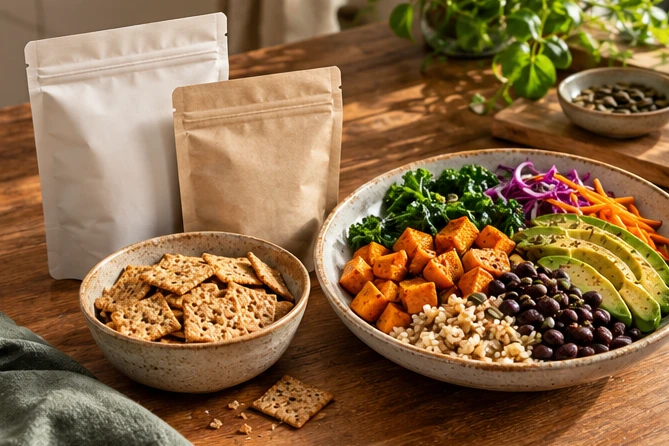
Make satisfying, minimally processed meals easy to access. Use convenient foods thoughtfully rather than treating every packaged product as equivalent.
Know what supports the takeaway.
- Key finding
- Make satisfying, minimally processed meals easy to access. Use convenient foods thoughtfully rather than treating every packaged product as equivalent.
- People, setting & outcomes
- Adults in a tightly controlled inpatient crossover trial; short-term intake differences are not an individual prediction.
- Types of evidence
- Human or controlled experiments. These labels describe sources, not a formal certainty grade.
- Limits
- This short trial tested complete menus in 20 adults. It cannot rank every packaged food or identify a universal mechanism for each product.
- Editorial source review
- · The Strong Table. No independent clinical reviewer or endorsement is claimed.
“Ultra-processed” can sound like a complete explanation for why someone gained weight. In practice, the category contains many different foods, and people need affordable, convenient meals. The useful conversation should help with those needs rather than add another source of guilt.
A controlled feeding experiment made this topic more compelling by comparing complete dietary patterns, not just asking people what they remembered eating.
What Hall’s study found
Kevin Hall’s team studied 20 adults in an inpatient crossover trial. Participants ate more energy and gained weight during the ultra-processed diet period compared with the unprocessed period, despite attempts to match several presented dietary characteristics. Each phase lasted two weeks.[1]
The design supports a causal effect of those tested dietary patterns on intake in that setting. It does not identify every packaged food as harmful or establish one ingredient as the cause. The menu, food texture, eating speed and other differences deserve attention.
Calories and food structure both belong in the explanation
The trial does not make energy balance irrelevant. It shows that the way food is presented and consumed can influence how much people eat. A calorie target is easier to follow when meals are enjoyable, sufficiently filling and accessible.
That makes the home environment worth improving. If the easiest option is always a highly snackable food, relying only on willpower is a weak plan. Put a meal you actually like within reach instead of trying to prohibit every tempting item.
Keep useful convenience
Frozen vegetables, canned beans, prepared basic ingredients and other convenient foods can make cooking realistic. Processing is not a single yes-or-no health verdict. Read the product in context: what does it add to the diet, and what is it replacing?
A practical dinner might use frozen vegetables, a ready-to-use protein and a simple grain. That is more useful than declaring the whole plan ruined because one ingredient came in a packet. Convenience and a nutritious pattern can coexist.
Try one change to the food environment
Prepare one repeatable lunch or dinner for the week and make it as easy to choose as the snack drawer. Keep favourite foods in realistic portions if that supports your routine. Observe appetite and the longer weight trend instead of judging the day by a purity score.
The evidence invites a better default environment, not fear of food. Use the trial to understand why some patterns make overeating easier, while keeping affordability, culture and enjoyment inside the plan.
Read the evidence.
Follow the studies and official guidance. Numbered references identify the research behind the relevant discussion; practical suggestions and personal perspective are distinguished from study findings.
- Inpatient randomized crossover trialHall et al. (2019): ultra-processed versus unprocessed diets ↗
General education for adults. Medical symptoms, prescribed diets and medication changes need individual guidance from a qualified healthcare professional.