Supplements / FROM THE EDITOR
Vitamin C: essential nutrient, modest cold advantage
Collagen, iron absorption and the common-cold meta-analysis—plus why megadoses are a poor default for training.
Vitamin C is essential, but most people can meet their needs through food. Regular supplementation modestly shortens colds; it does not reliably prevent them in the general population.
Know what supports the takeaway.
- Key finding
- Vitamin C is essential, but most people can meet their needs through food. Regular supplementation modestly shortens colds; it does not reliably prevent them in the general population.
- People, setting & outcomes
- Human deficiency, common-cold and nutrition research; routine supplementation and correction of low intake differ.
- Types of evidence
- Guidance, observational research or review · Research synthesis. These labels describe sources, not a formal certainty grade.
- Limits
- Cold benefits are modest averages from specific protocols. High-dose training studies often combine vitamins C and E, so effects cannot always be attributed to vitamin C alone.
- Editorial source review
- · The Strong Table. No independent clinical reviewer or endorsement is claimed.
Vitamin C deserves a place in your diet. It does not need to dominate your supplement shelf. The research is more useful when you separate its normal biological jobs from extra benefits claimed for high doses.
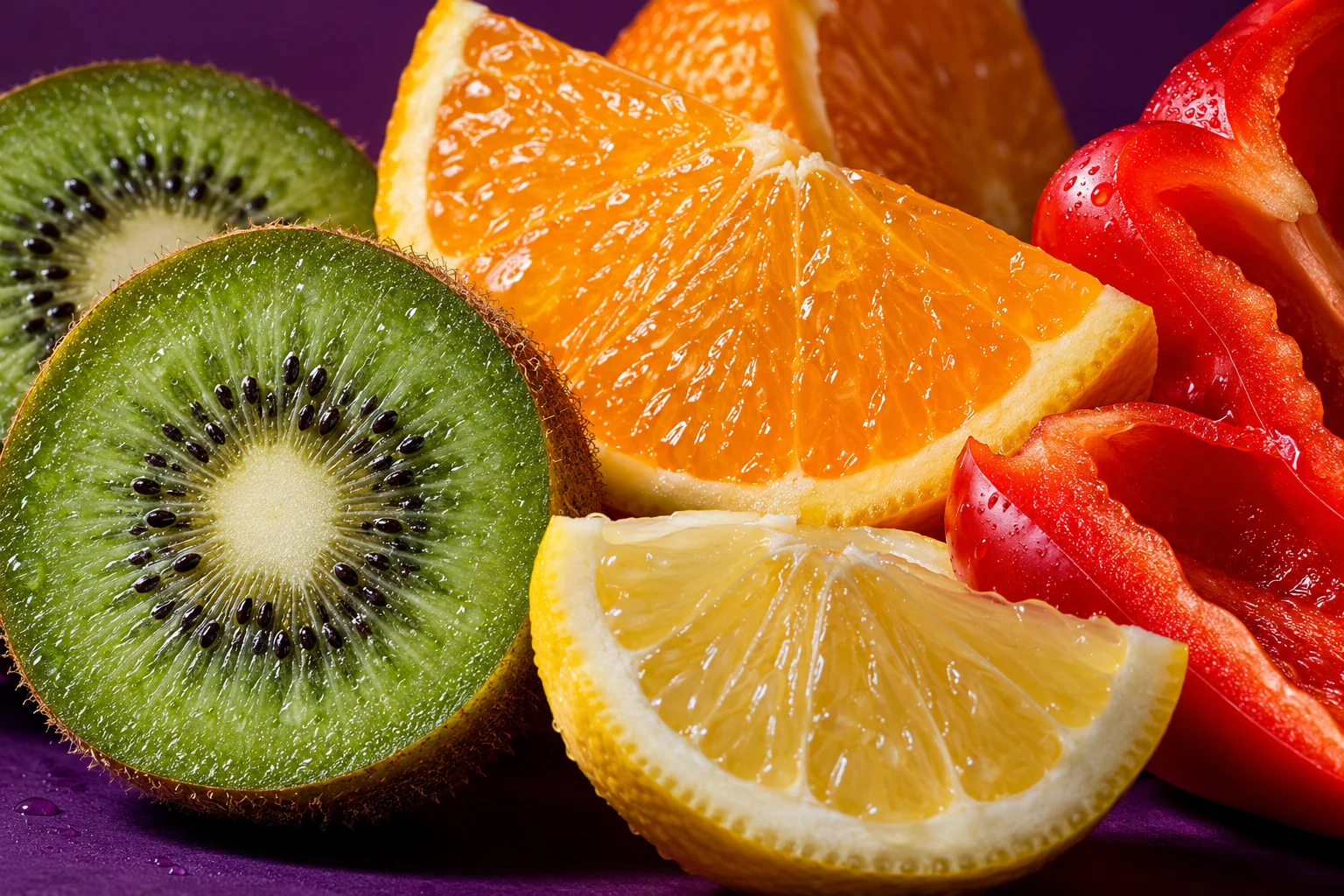
A kiwi, peppers or citrus can be part of the answer. If you use a supplement, make the dose solve a real need rather than assuming every additional milligram adds protection.
The established jobs
Vitamin C is needed for collagen synthesis and normal wound healing, supports normal immune function and helps absorb non-heme iron from plant foods. Deficiency can cause scurvy. Those roles explain why adequate intake is important; they do not prove that extra vitamin C improves skin, joints or immunity beyond adequacy.[1]
For a food-first example, pair lentils or beans with peppers or citrus. That builds vitamin C into an ordinary meal and can support plant-iron absorption. A pill may be convenient for inadequate intake, but it does not recreate the complete food.
Benefits: how strong is the case?
The best-established benefit is meeting a nutrient requirement. The cold findings are more specific than the usual “immune booster” label. Cancer prevention and athletic performance have not earned a routine megadose recommendation.[1][2][3]
| Benefit or claim | What the evidence supports | Who it applies to |
|---|---|---|
| Deficiency prevention / treatment | Established when intake is inadequate | People with inadequate intake or diagnosed deficiency |
| Collagen and iron absorption | Established normal nutrient functions | Adequate daily intake; not proof that extra enhances results |
| Cold duration | Small average reduction with regular supplementation | Not the same as starting after symptoms appear |
| Cold prevention | No consistent general-population reduction | Possible benefit during brief extreme physical stress |
| Exercise performance | No established general advantage from high doses | High-dose antioxidant combinations may affect adaptation |
| Cancer / heart protection | Not established by routine supplements | Do not treat antioxidant activity as prevention proof |
What the Cochrane cold review found
Trials of regular vitamin C, generally at least 200 mg/day, did not reduce cold incidence in the ordinary population. Cold duration was about 8% shorter in adults and 14% shorter in children, on average. In studies of brief extreme exertion or cold exposure, such as marathon runners and soldiers, incidence was lower.[2]
Translate the adult duration result carefully: for a seven-day cold, 8% is roughly half a day. It is an average across trials, not a guaranteed personal result. Starting vitamin C only after a cold began did not show consistent benefit. The trials do not justify copying child doses into an adult routine or vice versa.
Dose: adequacy before megadoses
U.S. adult recommended intake is 75 mg/day for women and 90 mg/day for men; smokers need an additional 35 mg/day. Needs differ during pregnancy and lactation. The adult upper intake level is 2,000 mg/day, which is a safety limit rather than a useful daily goal.[1]
If diet is short, fill the gap with food or a modest product. Increasing a label from hundreds to thousands of milligrams does not automatically create a stronger clinical effect. The cold research also distinguishes regular use from symptom-onset treatment, so “take a huge dose when sick” is not a faithful summary.
Training and the antioxidant paradox
Exercise produces signals that help the body adapt. Some trials of high-dose vitamin C combined with vitamin E suggest blunted cellular training adaptations; performance findings are mixed. This does not mean fruit harms your gains or that every vitamin C dose is counterproductive.[3]
It means there is little reason to take large antioxidant doses as a default recovery strategy when intake is already adequate. Use recovery basics you can evaluate—sleep, training load and enough food—rather than interpreting reduced oxidative markers as proof of better long-term performance.
Buying and safety
Plain ascorbic acid is a reasonable basic form. Buffered or liposomal products are not automatically superior for ordinary nutritional needs. Compare the actual amount and added ingredients, choose independent quality testing and avoid stacking multiple immune products without checking their combined dose.[1]
High doses can cause diarrhea, nausea and cramps. People with kidney disease, a history of certain kidney stones or iron-overload disorders should get advice before supplementation. Discuss antioxidant supplements during cancer treatment with the treating team. Adequate vitamin C is a sound goal; more is not an unlimited benefit.
Read the evidence.
Follow the studies and official guidance. Numbered references identify the research behind the relevant discussion; practical suggestions and personal perspective are distinguished from study findings.
- Official requirements, uses and safety summaryNIH ODS: Vitamin C ↗
- Cochrane systematic review and meta-analysisHemilä and Chalker: Vitamin C and the common cold, 2013 ↗
- Official sports-supplement evidence reviewNIH ODS: Antioxidants and exercise performance ↗
General education for adults. Medical symptoms, prescribed diets and medication changes need individual guidance from a qualified healthcare professional.