PERFORMANCE / RESEARCH REVIEW
Carbs are fuel, not a moral category
The right amount depends on how hard and how long you train.
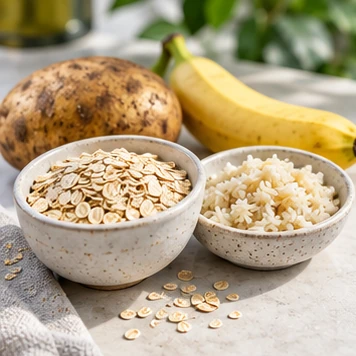
Carbohydrate availability matters more for prolonged or demanding exercise; everyday intake can flex with activity and preference.
Where the evidence is strongest
Sports nutrition guidance emphasizes carbohydrate for sustaining training and replenishing glycogen. A review of exercise trials found carbohydrate during longer endurance efforts more likely to help performance than during brief, easier exercise.
A simple use case
On a hard or long training day, consider a rice bowl, oats, potatoes or fruit around activity. On an easier day, you may want less. A low-carb recipe can still be useful; the label is a choice, not a score.
Context before conclusions
Key finding: Sports nutrition reviews support carbohydrate during longer, demanding endurance work and replenishment when hard sessions are close together.
Study context & limits: Benefit is smaller or less consistent for short, easy activity. Individual tolerance and total diet matter.
Source review: Editorial summary by The Strong Table. A source-review date was not recorded for this review. No independent clinical reviewer or endorsement is claimed.
Read our evidence standardsWhat the studies found
Sports nutrition reviews support carbohydrate during longer, demanding endurance work and replenishment when hard sessions are close together.
Where the evidence stops
Benefit is smaller or less consistent for short, easy activity. Individual tolerance and total diet matter.
What should you do with this?
Match carbohydrate to the work: a long run or hard tournament day may need more than an easy walk. Keep lower-carb meals as an option, not a rule for every training day.
Read the evidence
Sources include primary studies, systematic reviews, and official evidence summaries. Each claim reflects the population and methods studied; findings can change as research develops.
General education for adults, not diagnosis or individual medical advice. Discuss supplements and health conditions with a qualified clinician.
Explore all research →