PERFORMANCE / RESEARCH REVIEW
The natural muscle-building supplement shortlist
Creatine, caffeine, protein powder: which one earns a place?
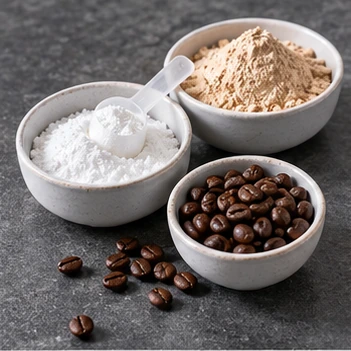
Creatine monohydrate has the strongest direct evidence for repeated high-intensity work; protein powder is a convenient food option, and caffeine can help performance for some people.
Creatine has a job
In repeated brief, intense efforts such as lifting, creatine can improve performance, which may support training gains over time. Monohydrate is the best studied form; pricier forms have not shown superiority. It is not an anabolic steroid and it does not replace progressive training.
Protein is a target, not a tub
A meta-analysis of resistance-training studies found benefits from extra protein when usual intake was lower, with average gains leveling around 1.6 g/kg/day in its analysis. Food or powder can meet that target. The estimate is not a strict ceiling for every person.
Caffeine is optional
Caffeine can reduce perceived effort and improve some exercise performance, but sleep disruption, anxiety, and individual sensitivity matter. A late workout may be better without it. Avoid high-dose powders and check medication interactions.
Context before conclusions
Key finding: Creatine has repeated-trial support for high-intensity exercise; protein supplementation meta-analysis shows larger benefit when habitual intake is below an adequate target. Caffeine can improve performance acutely but is not essential.
Study context & limits: The protein estimate is a group average, not a universal ceiling. Caffeine response and sleep disruption differ, while creatine-related water gain should not be mistaken for fat.
Source review: Editorial summary by The Strong Table. A source-review date was not recorded for this review. No independent clinical reviewer or endorsement is claimed.
Read our evidence standardsWhat the studies found
Creatine has repeated-trial support for high-intensity exercise; protein supplementation meta-analysis shows larger benefit when habitual intake is below an adequate target. Caffeine can improve performance acutely but is not essential.
Where the evidence stops
The protein estimate is a group average, not a universal ceiling. Caffeine response and sleep disruption differ, while creatine-related water gain should not be mistaken for fat.
What should you do with this?
For a healthy adult lifting regularly, creatine monohydrate is the clearest optional performance supplement. Meet protein needs with food or powder, and use caffeine only when it improves training without harming sleep.
Read the evidence
Sources include primary studies, systematic reviews, and official evidence summaries. Each claim reflects the population and methods studied; findings can change as research develops.
General education for adults, not diagnosis or individual medical advice. Discuss supplements and health conditions with a qualified clinician.
Explore all research →