NUTRITION / RESEARCH REVIEW
What happens when fat gets too low?
A zero-fat goal sounds tidy. Biology has other plans.
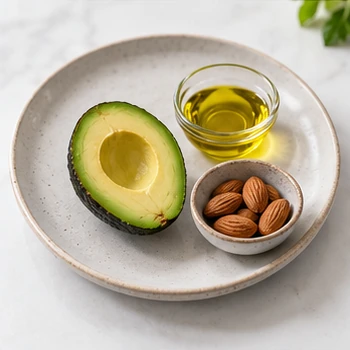
Dietary fat supplies essential fatty acids and helps carry fat-soluble vitamins; extreme restriction can crowd out needed nutrients. Hormone claims require nuance.
The essentials
Some fatty acids must come from food. Dietary fat also helps the absorption of vitamins A, D, E and K. A varied pattern with oils, nuts, seeds and fish can cover these without requiring a high-fat diet.
About hormones
A 2021 meta-analysis of intervention studies suggested lower testosterone on low-fat diets in men, but the evidence base was limited. A later review of randomized trials did not establish a consistent sex-hormone effect. That is not grounds to claim that any lower-fat plan 'destroys hormones'.
A practical guardrail
The calculator assigns roughly a quarter to a third of estimated energy to fat, then uses carbohydrate for the remainder. Individual needs and preferences still matter; a dietitian can adjust the split.
Context before conclusions
Key finding: Dietary fat supplies essential fatty acids and helps absorb fat-soluble vitamins. Very low-fat diets can make it harder to meet needs, although controlled diets with varied fat amounts can support health.
Study context & limits: Symptoms such as fatigue or hormonal changes are nonspecific and cannot be diagnosed from a macro percentage alone. Total energy restriction may be the real issue.
Source review: Editorial summary by The Strong Table. A source-review date was not recorded for this review. No independent clinical reviewer or endorsement is claimed.
Read our evidence standardsWhat the studies found
Dietary fat supplies essential fatty acids and helps absorb fat-soluble vitamins. Very low-fat diets can make it harder to meet needs, although controlled diets with varied fat amounts can support health.
Where the evidence stops
Symptoms such as fatigue or hormonal changes are nonspecific and cannot be diagnosed from a macro percentage alone. Total energy restriction may be the real issue.
What should you do with this?
Keep a meaningful source of unsaturated fat in the day and avoid pushing fat toward zero to hit a calorie number. Review total energy and health with your dietitian if the diet is very restrictive.
Read the evidence
Sources include primary studies, systematic reviews, and official evidence summaries. Each claim reflects the population and methods studied; findings can change as research develops.
General education for adults, not diagnosis or individual medical advice. Discuss supplements and health conditions with a qualified clinician.
Explore all research →