RACKET & CLUB / EDUCATION
The demands of the sport
for Badminton.
Support quick court steps and repeated overhead play.
 FIELD GUIDE / 01
What the activity actually asks for
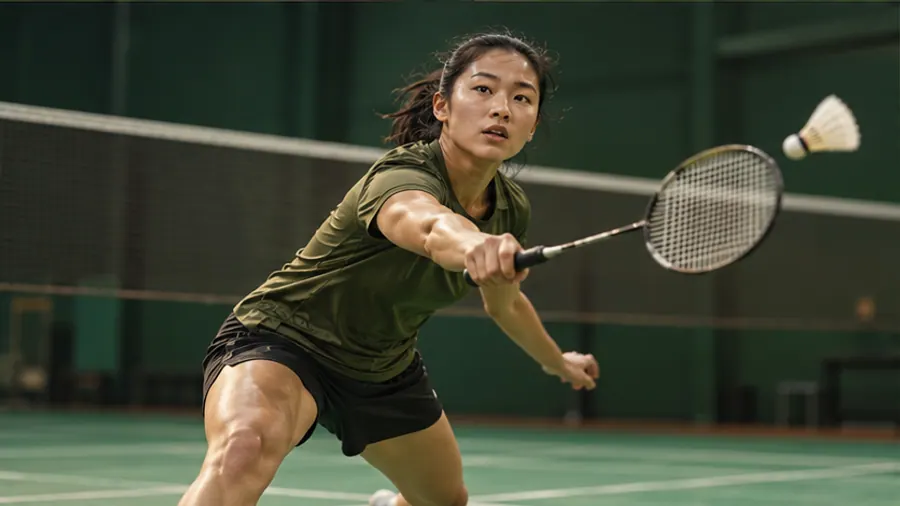
Badminton combines lunges, rapid stops, reaches and overhead strokes.
Where the gym fits
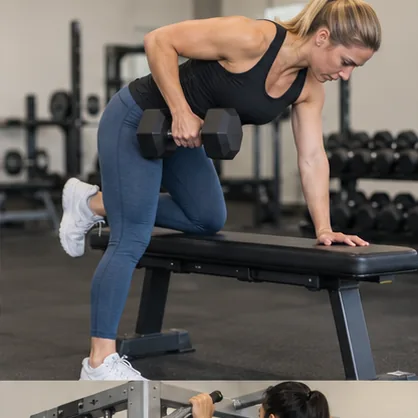
Single-leg strength, calves and upper-back control support general capacity. Physical preparation raises general capacity. Skill and tactics remain specific to the sport.
What to practice separately
Footwork and stroke timing are sport skills best practiced on court.
Three movements to understand
These are examples of general physical preparation. Tap any movement for target muscles, setup, execution, common errors and an easier alternative.
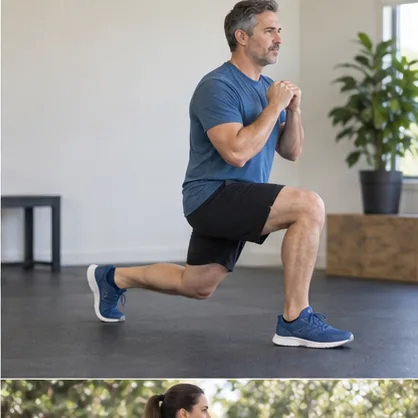
Reverse lunge
Quadriceps and glutes; hip stabilizers assist. Step backward, bend both knees within a comfortable range and return.
FULL TECHNIQUE GUIDE ↗Single-leg calf raise
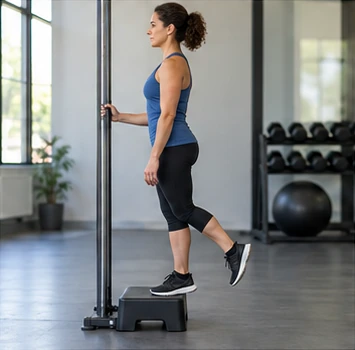
Gastrocnemius and soleus. Use balance support and move through a comfortable range.
FULL TECHNIQUE GUIDE ↗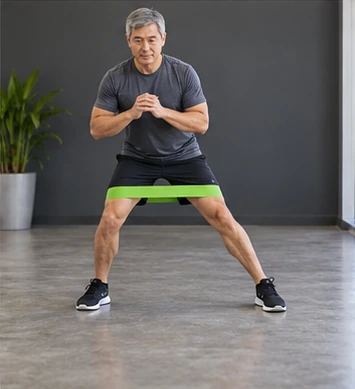
Lateral band step
Gluteus maximus and hip stabilizers. Take controlled side steps with soft knees.
FULL TECHNIQUE GUIDE ↗Put this into your week
Two strength sessions and court practice with an easier day after heavy play. Keep short efforts repeatable and preserve an easy aerobic base.
Begin with a manageable session and record how it affects the next practice. If you can complete every set with sound form and recover well, add a repetition or modest resistance. If quality or recovery falls, reduce a set or move the session away from the hardest sport day.
Footwork and stroke timing are sport skills best practiced on court. Increase court time gradually and watch shoulder or calf fatigue.
Evidence and interpretation
General training evidence informs this guide. The sport-specific exercise choices are coaching applications; training response varies by person and season.
General education. Work within your ability and seek qualified advice for injury, symptoms, contact technique or return to play.
See five Badminton workouts →