Dance
training guide.
Strength, balance and conditioning for performance days.
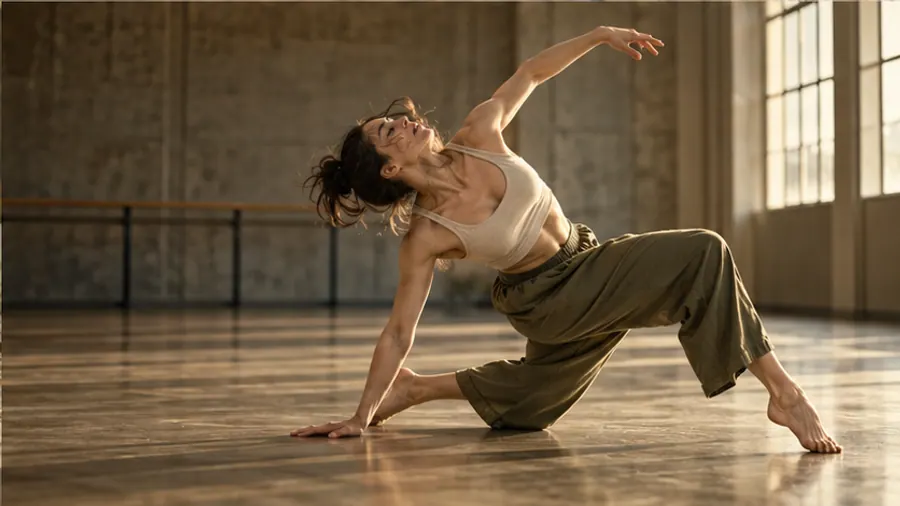
Understand the game.
These five guides connect the sport's demands to practical strength, conditioning and recovery decisions.
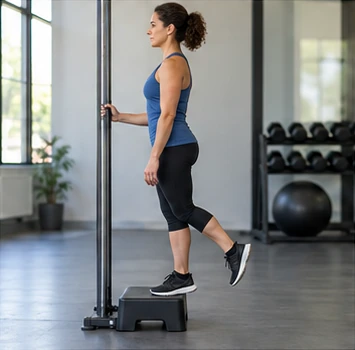
 FIELD GUIDE / 01
The demands of the sport
Dance demands vary by style but often mix balance, repeated lower-body work, coordination and long practice.
READ THE GUIDE ↗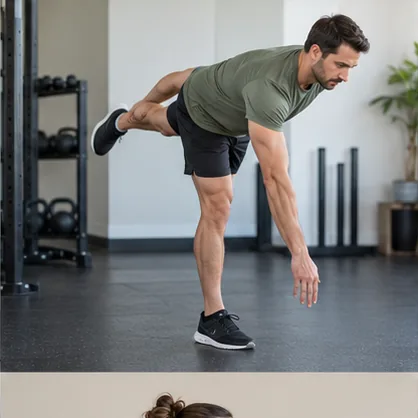
 FIELD GUIDE / 02
Strength that earns its place
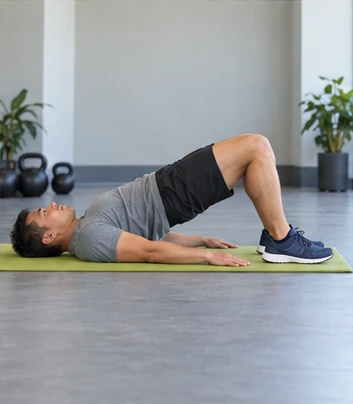
Leg strength, calves, trunk control and comfortable mobility help support the physical work. In the weight room, use controlled repetitions and a range you can own before adding load.
READ THE GUIDE ↗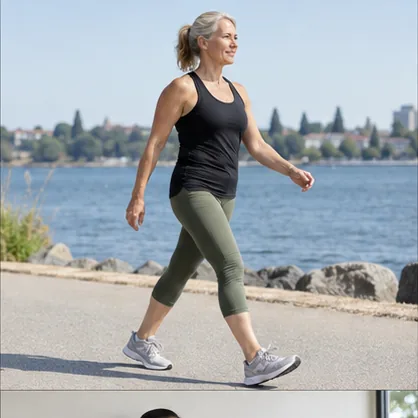 FIELD GUIDE / 03
Conditioning without junk fatigue
Keep aerobic work easy enough that it supports rather than replaces technique practice.
READ THE GUIDE ↗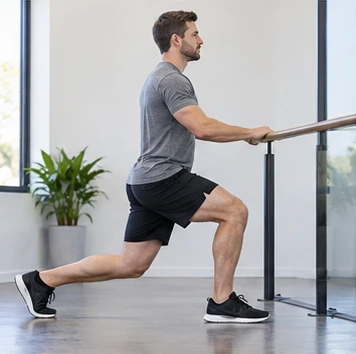 FIELD GUIDE / 04
Mobility and recovery that matter
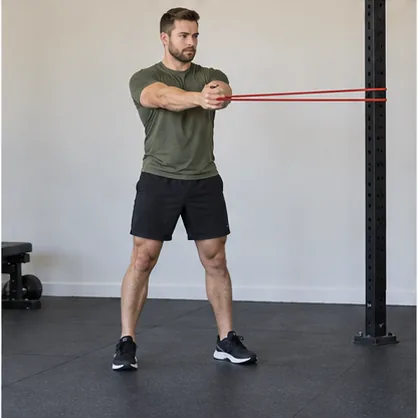
Pallof press can be practiced slowly in a comfortable range. Press hands forward without letting the band turn you. Stop short of pain; extreme range is not the target.
READ THE GUIDE ↗FIELD GUIDE / 05A week you can actually repeat
Two brief strength sessions plus classes and one easier movement day.
READ THE GUIDE ↗Choose a session.
Every workout lists its purpose, dose and movement guide. Skill practice and coaching remain part of sport preparation.
WORKOUT / 0101 / 38 MIN / FULL BODY STRENGTHDance / Strength base
Leg strength, calves, trunk control and comfortable mobility help support the physical work.
OPEN SESSION +
WORKOUT / 01Warm up for five minutes. Perform challenging sets with control, rest 60–120 seconds as needed, and adjust to your experience.
Progress by adding a repetition or small amount of resistance while form and recovery remain steady.
WORKOUT / 0202 / 27 MIN / BALANCE AND SIDE-TO-SIDE CAPACITYDance / Single-side control
Dance demands vary by style but often mix balance, repeated lower-body work, coordination and long practice.
OPEN SESSION +
WORKOUT / 02Warm up for five minutes. Perform challenging sets with control, rest 60–120 seconds as needed, and adjust to your experience.
Progress by adding a repetition or small amount of resistance while form and recovery remain steady.
WORKOUT / 0303 / 32 MIN / PUSH, PULL AND TRUNKDance / Upper and trunk
Leg strength, calves, trunk control and comfortable mobility help support the physical work.
OPEN SESSION +
WORKOUT / 03Warm up for five minutes. Perform challenging sets with control, rest 60–120 seconds as needed, and adjust to your experience.
Progress by adding a repetition or small amount of resistance while form and recovery remain steady.
WORKOUT / 0404 / 24 MIN / CONDITIONINGDance / Repeatable engine
Keep aerobic work easy enough that it supports rather than replaces technique practice.
OPEN SESSION +
WORKOUT / 04Warm up for five minutes. Perform challenging sets with control, rest 60–120 seconds as needed, and adjust to your experience.
Progress by adding a repetition or small amount of resistance while form and recovery remain steady.
WORKOUT / 0505 / 20 MIN / EASY MOVEMENTDance / Recovery reset
Manage rehearsal volume and foot or ankle soreness; avoid forcing flexibility.
OPEN SESSION +
WORKOUT / 05Warm up for five minutes. Perform challenging sets with control, rest 60–120 seconds as needed, and adjust to your experience.
Progress by adding a repetition or small amount of resistance while form and recovery remain steady.
How to put it together.
Two brief strength sessions plus classes and one easier movement day.
Manage rehearsal volume and foot or ankle soreness; avoid forcing flexibility.
Explore more training →General resistance training can improve strength and physical performance. The selected movements are practical applications to this sport's demands, not proof that any one drill uniquely prevents injury or guarantees a performance gain. Match the plan to your experience, season and health.
ACSM resistance training position stand (2026) ↗Resistance training and sport performance: systematic review (2024) ↗