EVERYDAY MOVEMENT / EDUCATION
Strength that earns its place
for Dance.
Strength, balance and conditioning for performance days.
 FIELD GUIDE / 02
Start with the big patterns
Leg strength, calves, trunk control and comfortable mobility help support the physical work. In the weight room, use controlled repetitions and a range you can own before adding load.
Three useful choices for dance
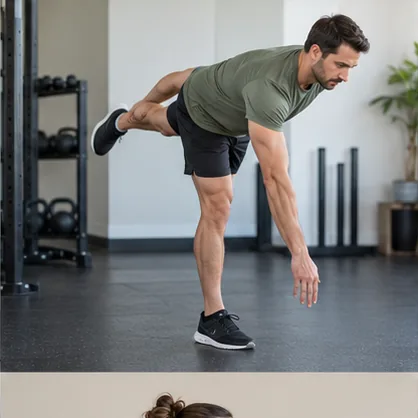
Supported split squat trains quadriceps and glutes; hip stabilizers assist. Build practical leg strength for getting up, climbing and daily tasks. Single-leg calf raise trains gastrocnemius and soleus. Build ankle strength for walking, running and stairs. Single-leg balance reach trains hip and ankle stabilizers; balance control. Practice accessible movement with control, rather than chasing extreme flexibility.
How to progress
Begin with about two challenging sets per move twice weekly. Add repetitions or a little load as technique and recovery allow. Training close to failure is not required on every set, and the best schedule is the one you repeat.
Three movements to understand
These are examples of general physical preparation. Tap any movement for target muscles, setup, execution, common errors and an easier alternative.
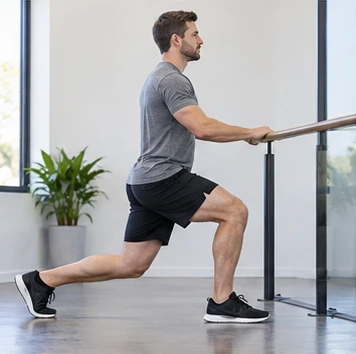
Supported split squat
Quadriceps and glutes; hip stabilizers assist. Use a wall or rail for balance; lower vertically and press through the front foot.
FULL TECHNIQUE GUIDE ↗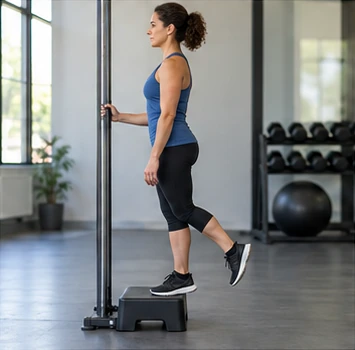
Single-leg calf raise
Gastrocnemius and soleus. Use balance support and move through a comfortable range.
FULL TECHNIQUE GUIDE ↗Single-leg balance reach
Hip and ankle stabilizers; balance control. Reach the free foot to three points slowly.
FULL TECHNIQUE GUIDE ↗Put this into your week
Two brief strength sessions plus classes and one easier movement day. Keep aerobic work easy enough that it supports rather than replaces technique practice.
Begin with a manageable session and record how it affects the next practice. If you can complete every set with sound form and recover well, add a repetition or modest resistance. If quality or recovery falls, reduce a set or move the session away from the hardest sport day.
Choreography and technical skill are learned in class with qualified teachers. Manage rehearsal volume and foot or ankle soreness; avoid forcing flexibility.
Evidence and interpretation
General training evidence informs this guide. The sport-specific exercise choices are coaching applications; training response varies by person and season.
General education. Work within your ability and seek qualified advice for injury, symptoms, contact technique or return to play.
See five Dance workouts →