Hiking
training guide.
Climb, descend and carry with confidence.
Understand the game.
These five guides connect the sport's demands to practical strength, conditioning and recovery decisions.
 FIELD GUIDE / 01
The demands of the sport
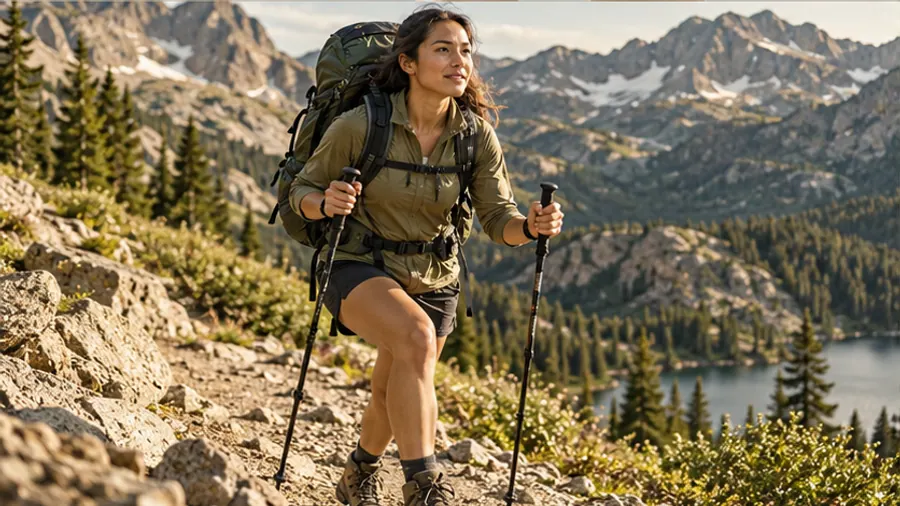
Hiking challenges sustained aerobic work, step-ups, descents, uneven ground and sometimes a pack.
READ THE GUIDE ↗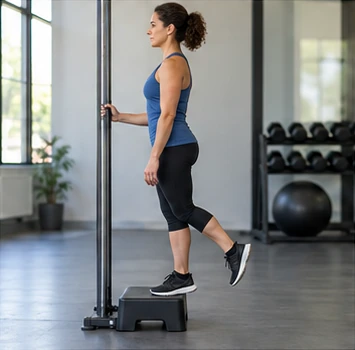
 FIELD GUIDE / 02
Strength that earns its place
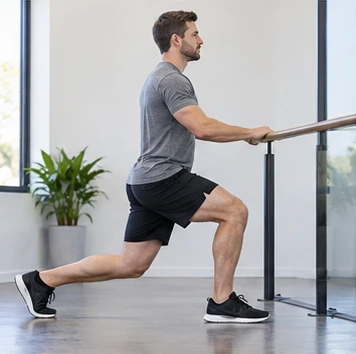
Step-ups, split squats, calves and carries build the leg and trunk capacity for trails. In the weight room, use controlled repetitions and a range you can own before adding load.
READ THE GUIDE ↗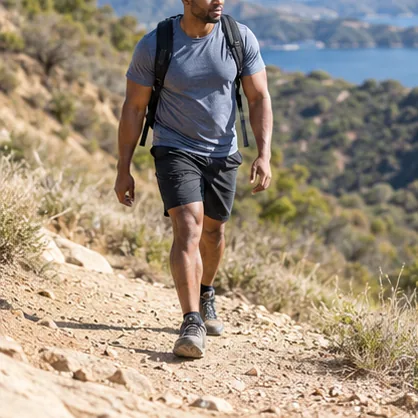 FIELD GUIDE / 03
Conditioning without junk fatigue
Gradually lengthen walks on terrain that reflects your planned hike; keep most efforts conversational.
READ THE GUIDE ↗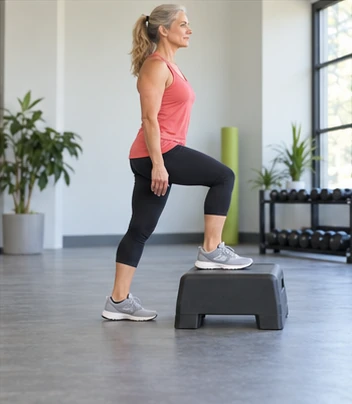 FIELD GUIDE / 04
Mobility and recovery that matter
Single-leg balance reach can be practiced slowly in a comfortable range. Reach the free foot to three points slowly. Stop short of pain; extreme range is not the target.
READ THE GUIDE ↗FIELD GUIDE / 05A week you can actually repeat
Two leg-focused strength days and one progressively longer hike or walk.
READ THE GUIDE ↗Choose a session.
Every workout lists its purpose, dose and movement guide. Skill practice and coaching remain part of sport preparation.
WORKOUT / 0101 / 38 MIN / FULL BODY STRENGTHHiking / Strength base
Step-ups, split squats, calves and carries build the leg and trunk capacity for trails.
OPEN SESSION +
WORKOUT / 01Warm up for five minutes. Perform challenging sets with control, rest 60–120 seconds as needed, and adjust to your experience.
Progress by adding a repetition or small amount of resistance while form and recovery remain steady.
WORKOUT / 0202 / 27 MIN / BALANCE AND SIDE-TO-SIDE CAPACITYHiking / Single-side control
Hiking challenges sustained aerobic work, step-ups, descents, uneven ground and sometimes a pack.
OPEN SESSION +
WORKOUT / 02Warm up for five minutes. Perform challenging sets with control, rest 60–120 seconds as needed, and adjust to your experience.
Progress by adding a repetition or small amount of resistance while form and recovery remain steady.
WORKOUT / 0303 / 32 MIN / PUSH, PULL AND TRUNKHiking / Upper and trunk
Step-ups, split squats, calves and carries build the leg and trunk capacity for trails.
OPEN SESSION +
WORKOUT / 03Warm up for five minutes. Perform challenging sets with control, rest 60–120 seconds as needed, and adjust to your experience.
Progress by adding a repetition or small amount of resistance while form and recovery remain steady.
WORKOUT / 0404 / 24 MIN / CONDITIONINGHiking / Repeatable engine
Gradually lengthen walks on terrain that reflects your planned hike; keep most efforts conversational.
OPEN SESSION +
WORKOUT / 04Warm up for five minutes. Perform challenging sets with control, rest 60–120 seconds as needed, and adjust to your experience.
Progress by adding a repetition or small amount of resistance while form and recovery remain steady.
WORKOUT / 0505 / 20 MIN / EASY MOVEMENTHiking / Recovery reset
Long descents can create soreness. Increase elevation and pack load one variable at a time.
OPEN SESSION +
WORKOUT / 05Warm up for five minutes. Perform challenging sets with control, rest 60–120 seconds as needed, and adjust to your experience.
Progress by adding a repetition or small amount of resistance while form and recovery remain steady.
How to put it together.
Two leg-focused strength days and one progressively longer hike or walk.
Long descents can create soreness. Increase elevation and pack load one variable at a time.
Explore more training →General resistance training can improve strength and physical performance. The selected movements are practical applications to this sport's demands, not proof that any one drill uniquely prevents injury or guarantees a performance gain. Match the plan to your experience, season and health.
ACSM resistance training position stand (2026) ↗Resistance training and sport performance: systematic review (2024) ↗