Rowing
training guide.
Train the legs and trunk that drive the stroke.

Understand the game.
These five guides connect the sport's demands to practical strength, conditioning and recovery decisions.
 FIELD GUIDE / 01
The demands of the sport
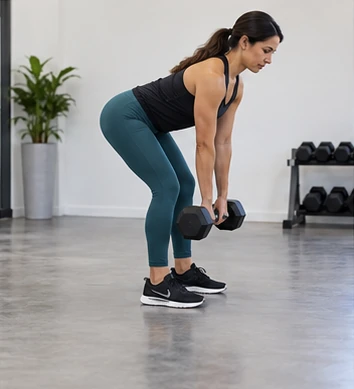
Rowing repeats leg drive, hip extension and trunk control across sustained effort.
READ THE GUIDE ↗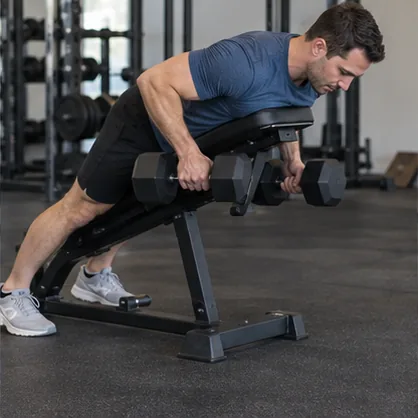
 FIELD GUIDE / 02
Strength that earns its place
Squat, hinge, pull and trunk stability build general capacity while managing back fatigue. In the weight room, use controlled repetitions and a range you can own before adding load.
READ THE GUIDE ↗ FIELD GUIDE / 03
Conditioning without junk fatigue
Use steady rows plus carefully placed intervals, scaling with technique and volume.
READ THE GUIDE ↗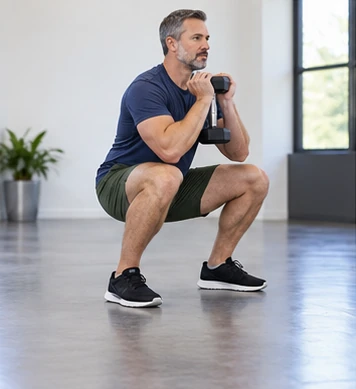 FIELD GUIDE / 04
Mobility and recovery that matter
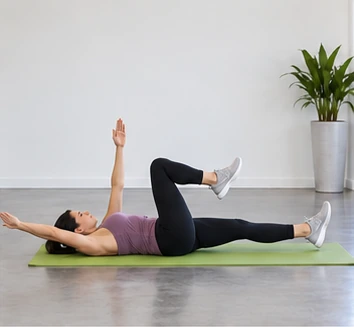
Dead bug can be practiced slowly in a comfortable range. Keep ribs down while slowly extending the opposite arm and leg. Stop short of pain; extreme range is not the target.
READ THE GUIDE ↗FIELD GUIDE / 05A week you can actually repeat
Two strength days with an easier aerobic row between harder sessions.
READ THE GUIDE ↗Choose a session.
Every workout lists its purpose, dose and movement guide. Skill practice and coaching remain part of sport preparation.
WORKOUT / 0101 / 38 MIN / FULL BODY STRENGTHRowing / Strength base
Squat, hinge, pull and trunk stability build general capacity while managing back fatigue.
OPEN SESSION +
WORKOUT / 01Warm up for five minutes. Perform challenging sets with control, rest 60–120 seconds as needed, and adjust to your experience.
Progress by adding a repetition or small amount of resistance while form and recovery remain steady.
WORKOUT / 0202 / 27 MIN / BALANCE AND SIDE-TO-SIDE CAPACITYRowing / Single-side control
Rowing repeats leg drive, hip extension and trunk control across sustained effort.
OPEN SESSION +
WORKOUT / 02Warm up for five minutes. Perform challenging sets with control, rest 60–120 seconds as needed, and adjust to your experience.
Progress by adding a repetition or small amount of resistance while form and recovery remain steady.
WORKOUT / 0303 / 32 MIN / PUSH, PULL AND TRUNKRowing / Upper and trunk
Squat, hinge, pull and trunk stability build general capacity while managing back fatigue.
OPEN SESSION +
WORKOUT / 03Warm up for five minutes. Perform challenging sets with control, rest 60–120 seconds as needed, and adjust to your experience.
Progress by adding a repetition or small amount of resistance while form and recovery remain steady.
WORKOUT / 0404 / 24 MIN / CONDITIONINGRowing / Repeatable engine
Use steady rows plus carefully placed intervals, scaling with technique and volume.
OPEN SESSION +
WORKOUT / 04Warm up for five minutes. Perform challenging sets with control, rest 60–120 seconds as needed, and adjust to your experience.
Progress by adding a repetition or small amount of resistance while form and recovery remain steady.
WORKOUT / 0505 / 20 MIN / EASY MOVEMENTRowing / Recovery reset
If your back feels overloaded, reduce total rowing and hinge volume and seek assessment for persistent pain.
OPEN SESSION +
WORKOUT / 05Warm up for five minutes. Perform challenging sets with control, rest 60–120 seconds as needed, and adjust to your experience.
Progress by adding a repetition or small amount of resistance while form and recovery remain steady.
How to put it together.
Two strength days with an easier aerobic row between harder sessions.
If your back feels overloaded, reduce total rowing and hinge volume and seek assessment for persistent pain.
Explore more training →General resistance training can improve strength and physical performance. The selected movements are practical applications to this sport's demands, not proof that any one drill uniquely prevents injury or guarantees a performance gain. Match the plan to your experience, season and health.
ACSM resistance training position stand (2026) ↗Resistance training and sport performance: systematic review (2024) ↗